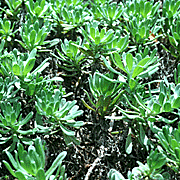
Cultural significance: Island flower for Kahoolawe; also used in lei making.
Conditions: Grows best in dry, hot spots like Ewa and the Waianae coast. Good for ground cover or filler. Can also grow in areas such as Kaimuki, as long as it gets a lot of sun.
Cultivation: Plant tip or leafy softwood cuttings. Don't over water and beware of mealy bugs. Feed it salt water once in awhile. If not growing in lowland areas, you may want to mix crushed coral or lime in the soil.
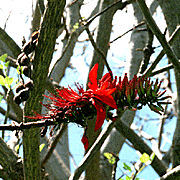
Cultural significance: Only found in Hawaiian lowlands and dry forests. Ancient Hawaiians used the wood for fish net floats, surfboards and canoe outrigger floats.
Conditions: Grow wiliwili in hot, dry areas. Needs a lot of room to spread its branches, and won't grow well in cloudy, wet areas, such as Manoa.
Cultivation: Soak seeds overnight in water to soften, then nick it with a knife to help germination. Can be grown from tip cuttings or seedlings. Makes a lot of rubbish during flowering season and has thorny branches, but otherwise easy to grow in sunlight. Chinese rose beetles may be attracted to wiliwili.
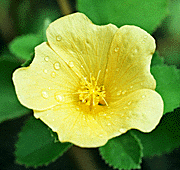
Cultural significance: The island flower of Oahu is used medicinally, as well as in lei making.
Conditions: Will grow in a hot place in Manoa, but needs an abundance of sunshine and good soil that doesn't puddle. For best results, grow in dry areas as an ornamental shrub.
Cultivation: Grows quickly from seedlings, but not well from cuttings. Light watering. May want to apply fertilizer with added micronutrients.
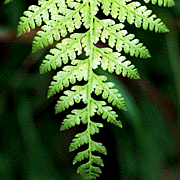
Cultural significance: Fern found only in wet forests here. A favored fern for lei making, with fronds also used to decorate hula altars.
Conditions: Great as a border or ground cover, but needs shade. Won't do well near sea breeze or in hot areas.
Cultivation: Fern can be found in some garden shops, but make sure it's not a similar one from the Mainland. Make sure to find a suitable location. Palapalai is sensitive to herbicides . Keep soil moist, but don't overwater
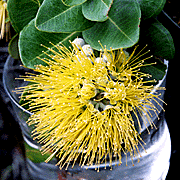
Cultural significance: Woods used by Hawaiians for tools, weapons and images. Found only in Hawaii, but not on Kahoolawe or Niihau.
Conditions: Tree grows best in higher elevations that still get abundant sunshine, but can survive in coastal areas. Doesn't mind crowding so it can be the focal point of a garden.
Cultivation: Find many different types of ohia lehua in garden shops. Grows quickly from seedlings.
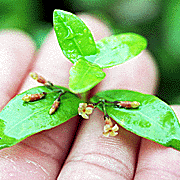
Cultural significance: Twining plant used in lei making and for medicinal purposes.
Conditions: Cool, wet, shady spots in Manoa or Wahiawa are best.
Cultivation: Soak seeds in cold water overnight, removing those that float to the top. Plant in pots and replant as it grows. When it reaches two feet plant in the ground. Mist daily. Grows like a vine so may want to provide a trellis or post for it to climb on. Fertilize at half the recommended dosages. Mealy bugs or scales occasionally a problem.