


A Hawaii expatriate living in Nevada wants to concoct a fiery Korean ko chu jang sauce, while a recent visitor from Arkansas wants to make her own coconut syrup. Stir up tastes of sweet 'n spicy
Mara Schultz of the University of Arkansas e-mailed, "I have used all the coconut syrup I brought back with me this June. I have tried the specialty shops here, but there just isn't any. I won't be coming back for another year and I don't want to order any more by mail. Can you help?"
A recipe follows, or order a Flavors of Hawaii gift pack of three syrups (coconut, pineapple-flavored coconut, and guava) is $15. Call (808)- 597-1727.
Coconut syrup
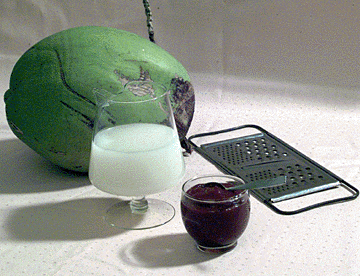
("The Food of Paradise" by Rachel Laudan, University of Hawai'i Press, 1996, $24.95)1 cup water, heated to boilingPour boiling water over grated fresh coconut. Strain the liquid to extract coconut milk.3 cups fresh coconut, grated
1/2 cup sugar
1/4 teaspoon cream of tartar
Take 3/4 cup of the coconut milk and mix with sugar and cream of tartar. Stir until sugar dissolves. Without stirring, cook slowly until syrup drops from the spoon - almost a jelly test.
Add half of the remaining liquid and continue cooking until syrup passes the same test. Then, add remaining liquid and cook again until syrup drops from spoon (224 degrees). Remove from heat and pour into a sterilized jar, or cool and beat thoroughly.
If poured directly into a jar, syrup remains transparent, but must be stirred before using to mix the oil that rises to the top.
If syrup is beaten, it becomes thick and milk white. Makes 1-1/4 to 1-1/2 cups.
Approximate nutritional analysis per tablespoon: 40 calories, less than 0.5 gram fat, no cholesterol, 5 milligrams sodium.*
Mike Lander also e-mailed, "I am a transplanted Kailua boy living in Las Vegas. I have had cravings for ko chu jang sauce, the kind served with the kal-bi ribs at the old Rosie's Boathouse in Kaneohe. I know it was a bottled product in small bottles for table use. Does anybody know what brand of sauce they used? "The only ko chu jang I can find in Las Vegas is the paste style. It is not the same. Anyone help, please?"
A recipe follows, courtesy of Millicent Kim, who writes of her ko chu jang mixture, "This is the ketchup of Korean eating, an essential ingredient on any table bearing a load of food. It's a dipping sauce like you've never experienced, especially good with cold, crispy green lettuce but also tasty with McDonald's hamburgers (even the french fries!). The recipe is from my mother, Helen Choy."
Parks Products Inc. of Honolulu, makers of Parks Brand ko chu jang paste, suggests another recipe for a tabletop hot sauce incorporating 1 heaping tablespoon EACH of ko chu jang paste and sugar; 3 tablespoons EACH of soy sauce and vinegar; plus optional additions of minced fresh chiles, garlic, chopped green onions and roasted sesame seeds.
Ko chu jang sauce
("Justice is Served Cookbook," Friends of the Judiciary History Center, 1997, $10)1 cup chile pepper paste (reddish brown, soybean-based paste available at Korean groceries), ASSI brand preferredMix all ingredients, except vinegar; then add vinegar. Makes 1 to 2 cups.1 cup white vinegar
1/2 cup white granulated sugar
2 tablespoons minced garlic
2 tablespoons chopped green onions
Optional additions: sesame seeds and sliced sweet chile peppers, to taste
Variation: Substitute 1 cup soy sauce in place of chile pepper paste
Also, can readers assist with recent recipe requests for spicy chicken wings similar to those served at the former Chicken Alice's; goodie goodie ice cream, also known as guri guri; and tofu salad with "all kinds of ono goodies in it?"
