

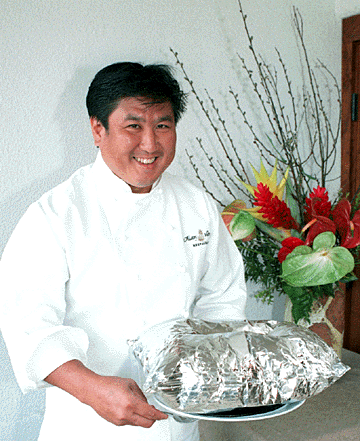

At the venerable age of 50, Reynolds Wrap has managed to outshine all of the stars above. It has wound itself around our consciousness, the frozen sodas of our school days, our casserole dishes and the tops of our Thanksgiving turkeys. Aluminum foil's chameleon-like qualities have earned it a place in 98 percent of American homes, according to Reynolds, as well as haute kitchens coast to coast.
And unlike the stars mentioned above, Reynolds Wrap has even managed to retain some of its mystery. Until this tell-all piece, that is.
Today, we reveal the answer to the one question that has perplexed users of aluminum foil through the decades. That is, when cooking, does the shiny side or matte side of the foil face the food?
 Place your bets now.
The answer, according to Laura O'Brien of Reynolds Metal Co., is that it doesn't matter. "Either side is fine," says O'Brien. "It depends on what you like for aesthetics."
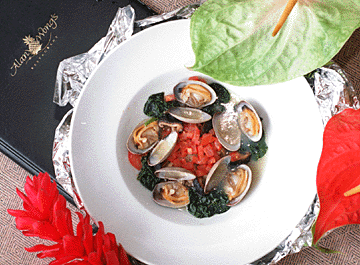
For chef Alan Wong of Alan Wong's restaurant, that aesthetic would be shiny side out, which he presents in an appetizer aptly dubbed "Da Bag."
Borrowed from the French concept of baking food "en papillote," Wong swaps the usual parchment paper for foil, wrapping it around a dish full of clams, kalua pig, spinach, shiitake and tomatoes.
Foods cooked with this method retain a maximum of flavor and moisture that might escape with parchment. The ingredients gently stew in their own juices, all the while letting off steam that expands the aluminum shell.
"It ends up looking like Jiffy Pop, turning into a 1-1/2-by-1-1/2-foot pillow," Wong said. "Then we break it open at the table and all the steam rises into your face."
Wow, dinner and a spa treatment at a mere cost of $10.50!
It's no wonder then that "When one (bag) goes out, five more go out, because everybody wants to know what it is," Wong says.
At home, Wong doesn't have to be as creative, and when using foil, he does little more than wrap up vegetables and potatoes for grilling.
When it comes to outdoor cooking, there is no better companion than aluminum foil. Ask any Boy Scout who has experienced the magic of a combining a piece of steak and a little mushroom soup in a foil packet and cooking it over an open flame.
When cooking with packets, fold the foil carefully rather than crumpling it up, to allow for an easy check for doneness.
And of course, a sheet of foil placed over the Thanksgiving turkey at the appropriate time will allow the top to brown without drying out.
In spite of aluminum foil's many uses -- 1,001 according to Reynolds Wrap -- it didn't catch on with home cooks right away.
"It wasn't easy selling a product that people had never seen, nor even imagined," said Charles Mapes, the first Reynolds Wrap salesman, and now a retired vice president of Reynolds Metals Co.
Aluminum in the 1940s was primarily a material of war, used in ships and planes. By the end of World War II in 1945, it was clear that the defense industry was downsizing and no longer needed all the aluminum it had been consuming.
To solve the problem, Reynolds Metals introduced a number of new products. Reynolds Wrap aluminum foil first appeared on grocery shelves in 1947.
Today, the company has a web site, http://www.rmc.com/wrap, with recipes and product information.
Vegetable cooking sprayPreheat oven to 375 degrees. Cut four large squares of heavy-duty aluminum foil. Spray the sheets on one side with vegetable cooking spray. Place one salmon fillet on each sheet, layering equal amounts of zucchini, carrots and shiitake on top of each fillet.
4 4-ounce salmon fillets
1 small zucchini, julienned
1 cup carrots, julienned
1/2 cup shiitake, sliced
1/4 cup fresh lemon juice
2 tablespoons olive oil
1 tablespoon fresh dill, chopped
2 garlic cloves, finely chopped
Salt and pepper to taste
In a small bowl, combine lemon juice, olive oil, dill, garlic, salt and pepper. Pour equal amounts over salmon and vegetable mixture. Fold and seal foil neatly and securely around salmon.
Place foil packets on a cookie sheet or pan and bake 15 to 20 minutes until cooked through.
 Approximate nutritional analysis per serving: 265 calories, 15 grams fat, 2 grams saturated fat, 65 milligrams cholesterol, 70 milligrams sodium. Difference with 1/4 teaspoon salt: 200 milligrams sodium.*
1-1/2 pound chuck steak, 1-inch thickPreheat oven to 450 degrees. Place 24-by-18-inch piece of heavy-duty aluminum foil in baking pan; place steak on center of foil.
1 10-1/2 ounce can condensed cream of mushroom soup
1 envelope dry onion soup mix, about 1-1/2 ounces
3 medium carrots, quartered
2 stalks celery, cut into 2-inch pieces
3 medium potatoes, pared and quartered
2 tablespoons water
Stir together mushroom soup and onion soup mix; spread over meat. Top with vegetables and sprinkle water over vegetables. Fold foil over and seal securely. Bake 1-1/2 hours or until tender.
Makes 4 servings.
Approximate nutritional analysis per serving: 640 calories, 38 grams fat, 15 grams saturated fat, 120 milligrams cholesterol, 1700 milligrams sodium.*
Vegetable cooking sprayPreheat oven to 350 degrees. Line a 13-by-9-by-2-inch baking pan with heavy duty aluminum foil. Spray foil sheet with nonstick cooking spray and set aside.
1 package (1-pound, 5.2-ounce) fudge brownie mix
1 cup crisp rice cereal
1/2 cup English toffee bits
Follow package directions to prepare brownie mix. Spread batter evenly in a foil-lined pan. Sprinkle cereal evenly over batter; press lightly. Sprinkle toffee bits evenly over cereal. Bake until brownies are set, 30 to 35 minutes.
Remove from oven and cool brownies in pan on a wire rack. Lift foil to remove brownies from pan to cutting board. Fold foil back to cut brownies. Makes 24 brownies.
Approximate nutrition analysis per serving: 170 calories, 8 grams fat, 10 milligrams cholesterol, 115 milligrams sodium.*
4 cups cooked ricePreheat oven to 450 degrees or preheat grill to high. Spray 4 12-by-18-inch sheets aluminum foil with nonstick cooking spray.
1 medium red bell pepper, chopped
1/4 cup chopped green onions
1/4 cup flaked coconut
1 15-ounce can crushed pineapple in juice, undrained
2 tablespoons packed brown sugar
3 tablespoons fresh lime juice
4 4-ounce skinless, boneless chicken breast halves
1 tablespoon Caribbean jerk seasoning (recipe follows)
Combine rice, red pepper, onions, coconut, pineapple, brown sugar and lime juice. Center 1/4 of rice mixture on each foil sheet. Rub jerk seasoning over chicken and place on top of ingredients on foil sheet. Wrap and seal foil to form four packets.
Bake 18 to 22 minutes on a cookie sheet in the oven, or grill 16 to 20 minutes on high in covered grill.
Makes 4 servings.
Approximate nutritional analysis per serving: 427 calories, 7.3 grams fat, 66 milligrams cholesterol, 82 milligrams sodium.*
1 teaspoon allspiceCombine seasonings and oil in a small bowl; mix well.
1/2 teaspoon dried thyme leaves
1/2 teaspoon paprika
1/4 teaspoon hot pepper sauce
2 teaspoons vegetable oil
Recycling
The Alzheimers connection