By Dennis Oda, Star-Bulletin
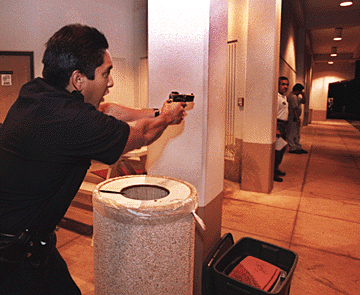
HPD recruits must be quick as they go through
training that tests their ability to handle situations.
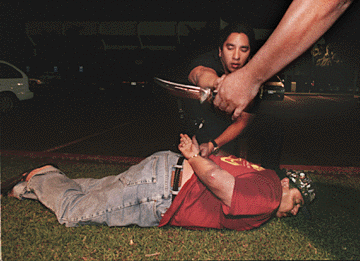
In one test, recruit Scott Vierra chases after a burglary
suspect as an evaluator and safety officer observe.
The 30 newest members of the
By Jaymes Song
HPD share a common goal—
to help the community
Star-BulletinSusan Klimek has no intention of slowing down, even after having two children and putting in more than two decades of military service. At age 41, she is among the newest members of the Honolulu Police Department, graduating last month as part of its 127th recruit class.
"I didn't want to stay home," said Klimek, a retired Army sergeant. "I'm not the type to watch soaps and plant flowers."
Neither are the other five women and 24 men in the class, who completed six months of training at the Police Academy and hit Oahu's streets for the first time two weeks ago.
"They stuck together," said Sgt. Robert Imoto, training supervisor for the class. "They helped each other out the entire way, and they became good friends. I'm very proud of them."
Who are they? Their previous occupations range from mechanic to secretary, and the average age is 28 -- making Klimek the oldest graduate in the class and something of an inspiration, says Training Officer Alika Desha.
"She just would not give up," Desha said. "She wanted it. I tip my hat to her."
In addition to the endless hours of running, push-ups and sit-ups during the 6-1/2-month academy, the recruits received training in everything from gang recognition and writing reports to handling domestic violence calls and recovering evidence.
"It's tough," Klimek said.
By Dennis Oda, Star-Bulletin
Families of police officers are often fearful of the
professional dangers of the job, but the new recruits say
the rewards and challenges of police work are worth it.
Scott Vierra refines his skills at apprehending a crime
suspect during a training scenario.
At the other end of the age spectrum is Amy Garon, a 22-year-old who said she wanted to become an officer for the different challenges she would face each day."My dad's been super," she said. "My mom's scared, but she supports me too."
Although Garon will make $29,772 a year as an entry-level officer, in a department where low pay has been an issue, she is satisfied with her decision.
"I'd rather be happy than making lots of money and being sad," she said.
Besides the pay issue, Garon and the others are entering a department with:
Several experienced officers leaving for departments in other cities with better pay, a vibrant economy and a lower cost of living;
The 127th cadet class is part of an "accelerated hiring" program to fill 201 officer vacancies in the department. HPD is authorized to have 1,924 officers but, as of Jan. 31, had only 1,723. The void was caused by officers taking advantage of an early retirement plan and some opting for other jobs.
According to training officials, the department has been graduating between two to three classes per year since 1990. Because of accelerated hiring, HPD is scheduled to graduate at least four and possibly six classes this year.
Despite the drawbacks, the majority of new recruits said the reason they became police officers is basic -- having an opportunity to help the community.
"Being born and raised in Hawaii, I have seen the changes as far as the increase in crime, drugs and gangs," said Anthony Sandobal.
"Being from Waianae, I hope someday to get a chance to come back and work with the community. If I can change just one person's views on life, I would consider myself successful."
Gary Montalbo Jr. said his background as a NCAA baseball umpire will help him handle people and maintain composure."You just make sure the guys play by the rules," he said. "I experienced the yelling, screaming and cussing. But you don't let your emotions take over you."
The profession's dangers are obvious. Klimek said her husband is very supportive but her two children -- John, 18, and Christine, 8 -- are worried about her safety.
"They don't love it," Klimek said. "But in the Army, I did similar work. If you do it carefully and do it right, you won't get hurt."
The payoff for Klimek -- who said this probably would be her last career change -- is being able to meet and help people, and not having to "sit behind a desk."
"I just want to be good at this job and retire," she said. "And at least make sergeant."