
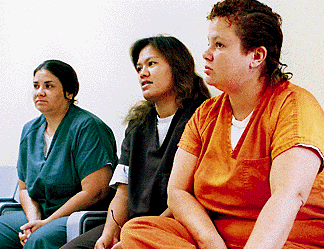
Inmates Kathy Silva, left, Sara Stant and Lauralee Martinez sit in the visiting room at Kauai Community Correctional Center. Officials would not allow photographs inside the holding cell where women are housed.
Photo by Ken Sakamoto, Star-Bulletin
In increasing numbers, they are serving time for felonies and misdemeanors, awaiting trial or sentencing, locked up for violating the terms of their furloughs, probations or paroles.
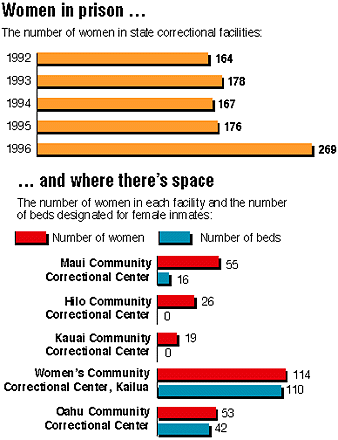
Right now, 269 women are incarcerated in Hawaii, although the state has beds for just 221. That's up nearly 53 percent from 176 female prisoners a year ago. "It just exploded," said Kauai warden Neal Wagatsuma. "Every facility is scrambling to find space."
The Women's Community Correctional Center on Oahu is well over capacity and under a federal consent decree to reduce overcrowding. And the neighbor islands have been even harder hit.
The Hilo, Kauai and Maui jails were overcrowded and understaffed before the women started streaming in. And because the jails were designed to house only men, they offered few options for accommodating women.
As a result, female inmates in neighbor island jails are routinely crowded into tiny holding cells and regularly deprived of work, counseling, education, recreation and other programs and privileges granted to men in the same facilities.
"Six women in one cell - that's sick," said Glenda Lee Laureta, who is awaiting sentencing at the Kauai jail. "It makes me feel like a dog."
"A dog in a kennel lives better than that," countered furloughed Kauai inmate Melinda Emerson.
Prison officials said life has improved for some women on Maui now housed in a 16-bed dorm. But it hasn't for those kept in holding cells on all the neighbor islands. Corrections chief Ted Sakai would not allow the Kauai holding cell to be photographed - the staff cited security concerns.
"It was almost like there was no hope in there," said Carissa Tuel, who spent five months in a holding cell before she was transferred to the women's prison. She since has returned to finish her sentence in Kauai's paramilitary cabin program, which offers the jail's best living conditions.
Laureta said the three holding cells have just six beds, forcing women to sleep on cots or mats placed on the floor next to the toilet or beneath the bottom bunk. If the numbers get too high, women inmates bed down in the visiting room and staff lounge.
Sara Stant, who has been at four jails since she was sentenced for manslaughter a year ago, said women have no tables in their cells.
They eat on their beds or on the floor amid ants, dirt, hair and cockroaches. Some sit on the toilet with their trays.
Stant sleeps on the floor of a holding cell with a shower. When a man is arrested during the night, she and her cellmates are awakened and moved into the other two holding cells while the new prisoner is washed.
"They have street people showering in our living quarters," Stant said. Added Tuel: "Sometimes they have blood or alcohol on them, or they get deliced in there. And it isn't sanitized after that use."
"I'm doing my time, but my needs have to be met," Silva said. "I'm only human."
The close quarters take a toll on the women, who said they are often afflicted with respiratory illnesses and head lice. Boredom is the main complaint, and tensions run high. Small disputes quickly <P>escalate, although violence is rare. "The whole time I was in there, I forgot I had committed a crime because it was so intense just living in there," said Sara Martinez, who is now out on emergency furlough.
Ann Bowers, serving time in the cabins program on a felony charge, said she was very angry when she was arrested, and living in the holding cell fueled her rage. "It was frustrating because nobody would listen. Every time the guards came to the door, they just got inundated because we needed so many things. So they just shut the door.
"It was horrible. We were locked down for hours on end, and sometimes it was hard to even get a book to read. You either slept all day or wrote letters."
Lauralee Martinez said she was locked in a cell without medical support or counseling while detoxing from drugs and alcohol after her arrest. "I can't handle being around that many people and I began to panic," she said. "I felt like hanging myself."
Sara Martinez said she filed three grievances over conditions in the holding cell, and was sent to the women's prison as "a management problem." Said Stant: "There's a fear that if you bring up your issues and say how you feel, they'll retaliate against you."
Although the women said it angers them to live in conditions that men endure only as punishment, they don't blame those charged with their care. "The warden is trying to do the best he can," Silva said. "Society itself just doesn't give a damn about us."