Hawaii tops nation in state taxes paid
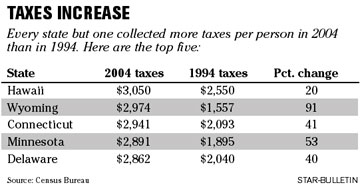
Isle residents paid an average of $3,050 per person in 2004, a Census study shows
By Stephen Ohlemacher
Associated Press
WASHINGTON » Hawaii residents paid more state taxes in 2004 than residents of any other state in the country, according to newly released data from the Census Bureau.
Hawaii residents paid an average of $3,050 per person in 2004, while Texans paid the least, an average of $1,368.
Every state but one collected more taxes per person in 2004 than it did a decade earlier, according to the data.
State taxpayer burdens increased by an average of 41 percent from 1994 to 2004. Only Alaska saw the amount it collects per person decline.
Even when the numbers are adjusted for inflation, the individual tax burdens increased in 43 states.
Rising education and Medicaid costs have fueled spending growth, which has led to higher taxes.
"Medicaid has been the fastest-growing program in state budgets going back to 2000," said Arturo Perez, a fiscal analyst at the National Council of State Legislatures.
Medicaid is the state-federal health insurance program for the poor. In an effort to stem rising costs for states, Congress passed legislation last week allowing states to charge about 13 million Medicaid beneficiaries new or increased co-payments and premiums.
The big range in state taxes reflects the variety of government revenue systems throughout the country. The numbers do not include local taxes (city or county), which in many states generate most of the money for schools. They also do not include federal taxes.
Wyoming, Connecticut, Minnesota and Delaware round out the top five states in tax receipts per person. South Dakota, Colorado, New Hampshire and Alabama round out the bottom five.
New Hampshire had the biggest increase from 1994 to 2004, with the state tax burden more than doubling. But at $1,544 per person, it remained among the lowest in the country.
Alaska, which gets much of its revenue from oil production, saw its state tax receipts drop 1 percent, to $2,035 per person. Oil revenue helped Alaska spend $12,294 per person in 2004, far more than any other state.
States, on average, get nearly half their tax revenues from sales taxes. They get a third from personal income taxes and 5 percent from corporate income taxes.
Education is the biggest budget item, consuming an average of 31 percent of state spending. Public welfare, which includes Medicaid, comes in second at 24 percent. Highways account for 6 percent of state spending; police protection, just 1 percent.
Many states raised taxes early in the decade because of budget shortfalls caused by the economic slowdown. Many of those states now have budget surpluses, leading some, including Hawaii, to debate tax cuts.
"Many states are having an unexpected surplus of revenue, and that is because of economic growth," said Stephen Slivinski, director of budget studies at the Cato Institute, a Washington think tank. "It's mainly because their estimates on economic growth were very low."