
Hawaii’s
Back yard
Cheryl Chee Tsutsumi
Waikiki Aquarium
celebrates 100 yearsWhen the Waikiki Aquarium opened on March 19, 1904, it was home to 400 aquatic animals, admission was 10 cents and some visitors arrived on horseback.
What a difference a century makes!
Today, looking forward to its centennial, the acclaimed marine research and education facility is home to more than 2,500 animals representing some 420 species of aquatic plants and animals. Each year, about 350,000 people walk through its doors to learn about the undersea world through unique attractions such as "Diversity and Adaptations," whose residents include amazing camouflage artists and creatures of the night; "Hunters on the Reef," a 35,000-gallon exhibit teeming with sharks and other feared predators of the Pacific; and the "Jet Set," the intriguing cephalopod mollusks (cuttlefishes, squids and octopuses).
Waikiki Aquarium
Address: 2777 Kalakaua Ave., in WaikikiHours: 9 a.m. to 4:30 p.m. daily except Christmas Day
Admission: $7 for visitors; $5 for students, local residents, active military personnel and 60 and older with valid ID; and $3.50 for youths 13 through 17. Children 12 and under are admitted free.
Call: 923-9741
E-mail: tammyc@waquarium.org
Web site: www.waquarium.org
See also:
-- March: Aholehole Month
-- 100th-Anniversary events
Nestled oceanfront beside a living reef, the Waikiki Aquarium is the third-oldest public aquarium in the United States. Since 1919 it has been part of the University of Hawaii, an affiliation that has enabled it to make many noteworthy contributions in the realms of education, conservation and research on the aquatic life of the tropical Pacific.
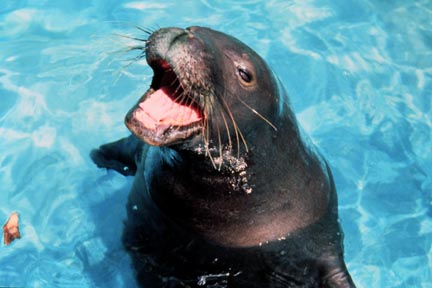
For instance, the Waikiki Aquarium was the first facility in the world to become home to the Hawaiian monk seal (an endangered species found only in Hawaii) and the first in the nation to hatch nautiluses, raise seven generations of mahimahi and display giant clams, blacktip sharks and cuttlefishes. Its studies on the propagation of coral has developed into a program that boasts the oldest -- and what may be the largest -- collection of living corals in the country.
It also is the only aquarium in the United States to showcase flamboyant cuttles.
Unlike other cuttlefishes that primarily swim, these extraordinary creatures actually walk along the ocean bottom using two modified front tentacles and two thickened flaps on their posterior as "legs." As their name suggests, they flaunt spectacular color patterns that can flash and change in a microsecond.
COURTESY OF WAIKIKI AQUARIUM
More than 420 species of aquatic plants and animals make their home at the Waikiki Aquarium.
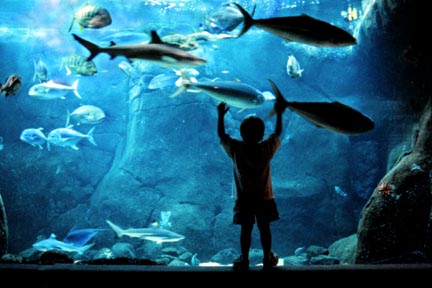
ALL OF THE EXHIBITS' habitats mirror what you'd actually see in the ocean. Even better, the designs allow close-up views of the animals, and meaty educational content is provided in the eye-catching graphics.
Among the aquarium's acclaimed programs are "Exploring the Reef at Night," during which participants venture to the nearby reef with naturalists to discover what marine creatures come out when the sun goes down, and "Family Overnights," themed sleepovers focusing on subjects such as "Secrets of the Sea Jellies" and "Mysteries of the Nautilus."
"We may not be the biggest aquarium in the world, but we are definitely making a big impact in the scientific field and on our visitors, both young and old," says interim director Cynthia Hunter.
"Most of them spend an average of two hours with us and leave with new knowledge, respect and appreciation for the ocean and the incredible array of plants and animals that it supports."
Three events will kick off the aquarium's 100th-anniversary celebration. "O! What an Experience Family Fun Day," on March 14, will be a full day of games, food and entertainment with performers Jordan Segundo, Tani Lynn, Omni, keiki hula troupes, clowns, face painters and ocean-themed inflatables.
There also will be unique crafts for sale by the Waikiki Aquarium, Audubon Society, Hawaii Nature Center and the Hawaiian Island Humpback Whales National Marine Sanctuary; talks on shoreline marine life, Hawaiian monk seals and sharks; and screenings of the documentary films "Corals Are Alive" and "Reef Explorers."
"100 Years of Science -- On the Edge" is aimed at the scientific community and people who have an interest in marine science.
Set for March 18, it will spotlight the aquarium's past and present directors, who will share stories, videos and photographs about their most memorable Pacific discoveries. This is the first time Hunter, Leighton Taylor and Bruce Carlson will be gathering together for a public presentation.
Festivities for the 100th Birthday Bash on March 19 (the aquarium's actual birthday) will feature a concert under the stars by the Makaha Sons; tastings of delicacies from Sam Choy's Diamond Head Restaurant, Meritage, Kahala Caterers and other popular restaurants; and a huge cake adorned with 100 candles (everyone attending will receive a slice). The aquarium's galleries will be open throughout the evening.
"Hawaii is the Ocean State," Hunter notes. "The perpetuation of ocean fishing and recreation, as well as our tourism-based economy, depends on the health of our coastal ecosystems. One of our primary goals is to educate the public about the importance of protecting our precious marine resources.
We're thrilled that the Waikiki Aquarium will be marking its 100th anniversary next month, and invite everyone to help us celebrate and learn about the wondrous marine creatures who share our beautiful Island home."
COURTESY OF WAIKIKI AQUARIUM
Families can visit with more than 2,500 ocean creatures at the Waikiki Aquarium.
March is Aholehole Month
The Waikiki Aquarium kicks off its new "Animal of the Month" program in March by featuring the aholehole (young Hawaiian flagtail).Throughout the month, visitors will enjoy programs revolving around this endemic (found only in Hawaii) fish, including special exhibits, talks by docents at 10 a.m. every Saturday, and free temporary tattoos for the first 1,000 children who visit the aquarium during March.
Aholehole are displayed in the "Edge of the Reef" exhibit. Bright silver in color, they have upturned mouths that are angled for capturing plankton and large eyes indicative of their nocturnal lifestyle. They were a favorite of the early Hawaiians, who sometimes used them in ceremonies to dispel evil spirits.
Marine creatures that will be in the limelight over the next year will be:
April: Black coral
May: Triggerfish
June: Monk seal
July: Butterflyfish
September: Shark
October: Scorpionfish
November: Red pond shrimp
December: Eel
January: Jack tuna
February: Sea urchin
COURTESY OF WAIKIKI AQUARIUM
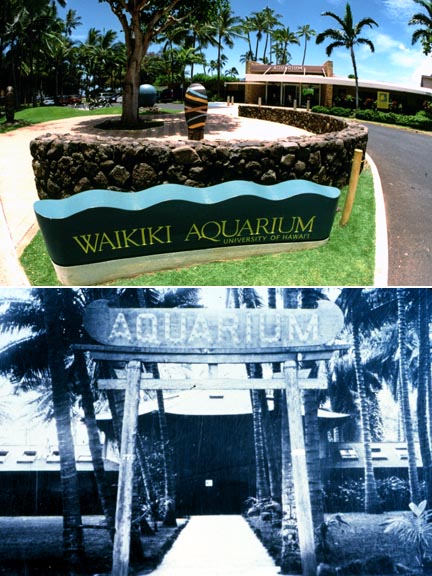
The Waikiki Aquarium has changed a lot over 100 years and will mark its centennial March 14 through 19.
100th-anniversary special events
O! What an Experience Family Fun Day: Event marks the Waikiki Aquarium's 100th birthday, 9 a.m. to 4:30 p.m. March 14. Admission is $1 per person, or 100 pennies. Children under 12 and Friends of Waikiki Aquarium members admitted free.Celebrating 100 Years of Science -- On the Edge: Informative evening will feature discussions, video and photos of research findings at the Waikiki Aquarium, 6-9 p.m. March 18. Admission is $30 for adults and $12 for children 16 and younger ($25 and $10, respectively, for FOWA members). Children under 2 will be admitted free, but this event is not geared to young children.
100th Birthday Bash: View exhibits while enjoying live music and cuisine 6:30-9 p.m. March 19. Admission is $28 for adults and $14 for ages 7 through 12 ($20 and $10, respectively, for FOWA members). Children 6 and under will be admitted free. There will be a fee for food sampling. Due to space limitations, only 550 people can be accommodated.
See the Columnists section for some past articles.
Cheryl Chee Tsutsumi is a Honolulu-based free-lance writer and Society of American Travel Writers award winner.