Friday, December 25, 1998
Photo courtesy John Harkes
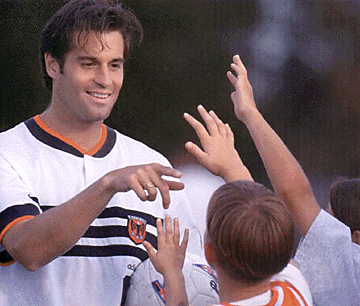
John Harkes works with a group of
children at a soccer clinic.
Harkes: Success ahead
for U.S. soccerThe former member of the
By Al Chase
national team is optimistic
about his own career as well
Star-BulletinJohn Harkes has experienced the American dream through the world of soccer on both sides of the Atlantic Ocean.
He played collegiately at NCAA powerhouse Virginia, made his first appearance with the U.S National Team in 1987, competed in the 1988 Olympics and was a member of the 1990 and 1994 U.S World Cup teams.
Harkes recorded a number of firsts playing professionally six years in England. He was the first American to play in the Premier League (England's top division), scored the first goal by an American at Wembley, was the first American to play in an English FA Cup final and became the first American transferred for more than $1 million.
One downside was his exclusion from the 1998 U.S. World Cup team that went 0-3 in France with U.S. coach Steve Sampson resigning four days after the third loss. Harkes refused to be drawn into a war of words about his fate.
But the 31-year-old New Jersey native believes he will get the call from new U.S. National team coach Bruce Arena.
"The only reason I'm not on the national team is because of a personal thing with Steve Sampson. It doesn't have anything to do with ability," Harkes said. "I have the experience and I'm on top of my game right now, so I don't have any concern about getting back on the national team."
Arena was Harkes' coach at Virginia and most recently for Major League Soccer's D.C. United.
With 90 international appearances for the U.S., 27 as captain, Harkes says Arena's selection as national team coach is a good one and that changes are forthcoming.
"I think Bruce Arena is a complete different coach than Steve Sampson. Basically it's one thing, his proven record, his success record, not just at the university level, but he has professional experience and that's where Steve Sampson lacked," Harkes said.
"Bruce knows what its like day in and day out playing every single day and coaching every single day with players at that level. I'm not saying he's going to be great. We'll have to see but I think he's going to be very good.
"I think what he's going to do right now is be very organized and get involved not only with the national team but with the youth development in this country. That's something that really needs to be focused on and really hasn't been for years."
When Arena was named coach he said he wanted to look at as many players as possible before qualifying begins for the 2002 World Cup.
Harkes agrees with this approach, that new faces need a chance, need game experience and the opportunity to compete at the international level. He also feels Arena will call the veterans back when necessary.
"We need to mix youth with experience so we're building all the time," Harkes said. "Down the road, if we play our cards right and the right people are making the right decisions and aren't in it just for the money, then we'll be very competitive."
Harkes attributes Arena's success to several qualities.
"Bruce doesn't try to take on a persona where he's the main man. I think he's a players' coach," said Harkes. "He doesn't dictate orders to players. He understands them and speaks to them with respect. One thing I know Bruce is very good at, which I haven't seen in than any other American coach, is just picking talent and blending a group of players together with different personalities. At the national team level that's going to be very hard because there are a lot of egos there."
Harkes believes strongly in the phrase, "Kids are the future and not just in soccer, in everything." He helps raise money and donates equipment to D.C. Scores, an after school program for inner city children in Washington.
He is in demand as an instructor at clinics, which is the reason he is visiting Hawaii this week.
He promotes children's programming on D.C Public television and does anti-smoking commercials aimed at teenagers.
Harkes thinks the United States Soccer Federation needs to become the mover in restructuring youth soccer.
"We need the USSF to bring everything together for one goal. Setting targets like winning the World Cup in 2010, that's outrageous. But to have a target to say we're going to be very competitive, that is a worthy goal.
"I think U.S. soccer has become better year after year. If the federation realizes the mistakes we made in 1998, especially on the world stage, then I think we'll do better."