

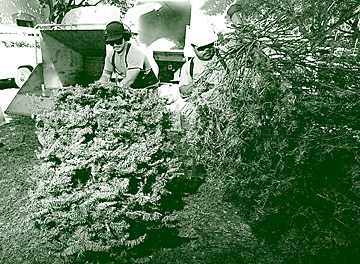
File photo
The state TreeCycling program provides terrific
garden mulch to parks and schools.
It's Christmas Night, your tree is lighted, there's a feeling of closeness and contentment and maybe a certain relief that it's all over. But what goes up, must come down and in this case, it's that tree. Repack the ornaments, wind up the lights, pull off the tinsel, and what have you got? A dead tree with a second chance. Noble end for
Christmas treesIf you deliver it to one of the state's TreeCycling centers, it will be chipped into mulch that is given to public parks, schools, botanical gardens and to the National Memorial Cemetery of the Pacific at Punchbowl.
Mulch is the great garden cover-up, because an inch or two of mulch over the soil around trees and plants cuts down on the need for watering, improves the soil and smothers the weed seeds. And that old tree can be part of this.
But the tree must be delivered on Saturdays, Jan. 2 or Jan. 9, between 9 a.m. and 3 p.m. If you are unable to get the tree to one of the 13 sites on Oahu during those hours, leave it for your refuse collection.
If your neighborhood is serviced by automated trucks, it will be picked up at the monthly collection of garden waste. To determine the exact date, call the listing on Page 44 of Government Pages in the telephone directory, under Public Works, Refuse Collection and Disposal, for your area.
If your neighborhood has the three-man crew refuse pick-up, the tree can be left at curbside on your regular collection day.
The message here is "DON'T leave your tree at a TreeCycling site at any time except during the two 6-hour periods on consecutive Saturdays." If you have ever seen a dry Christmas tree catch fire, you will understand. It will literally explode, and the pickup sites are almost all places frequented by young children. Leaving the trees there untended would be like leaving cans of gasoline.
During the collection periods, the trees will be unloaded from your car by volunteers from the Lions Clubs and the Church of Jesus Christ Of Latter-Day Saints and chipped on the spot.
Chipped Christmas trees are a great source of mulch, but there are many others, from macadamia nut shells and raked leaves to seaweed and shredded garden waste. Mulch is simply a way of reproducing a forest floor. As the fallen leaves settle on each other in a forest, the lower layers from past years decompose first into leaf mold and then into a light, rich soil that is nature's mulch.
The mulch from the TreeCyling program is already promised to public landscaping, but you can either make your own or buy it from garden shops. Mulch differs from compost in that it has not thoroughly decomposed, and it is not worked into the soil but left in a thin layer on top of it. As is often true, the more you spend, the better looking the mulch will be, and that isn't saying much. Until it begins to deteriorate into the soil, mulch isn't very pretty.
Mulching your plants will keep moisture from evaporating from the soil surface, which is especially important during our hot summers. Because mulch loosens the soil, during the rainy seasons (remember them?), mulch will hold the water that would otherwise run off and allow it to penetrate the soil. It will also hold the soil, even on steep slopes, and will improve its quality by providing organic nutrients that plants need.
Before applying mulch to your garden, you have to do one thorough weeding because the mulch will prevent the seeds in the soil from germinating, but it won't kill the weeds already there. It also won't get rid of the roots of perennial weeds, but because the soil is loosened, they'll be easier to pull up. After applying the mulch, water it thoroughly.
And don't assume that if some mulching is good, more is better. Too thick a layer can prevent any water from getting through to the surface of the soil, depriving the roots of air and nutrients.
When mulching around trees, start several inches away from the trunk to prevent free housing for bugs.
TreeCycling can't accept flocked trees, and all of the decorations, stands and nails must be removed from green trees in order to get them through the chipper. Christmas is over, but by recycling your tree, you can give one extra gift to the beauty of our community.
TreeCycling centers
When: 9 a.m. to 3 p.m. Jan. 2 and 9
Kaiser High School, 511 Lunalilo Home Road
Kaneohe District Park, 45-660 Keaahala Road
Kapalama Elementary School, 1601 No. School Street
Kapiolani Community College, 4303 Diamond Head Road
Kapolei Elementary School, 91-1119 Kamaaha Loop
Lincoln Elementary School, 615 Auwaiolimu Street
Mililani Makaunulau (16 Acre) Park, Makaunulau Street
Polynesian Cultural Center, 55-370 Kamehameha Highway, Jan. 2 only
University of Hawaii Manoa, Richardson Law School parking lot, 2515 Dole St.
Dole Street Waianae Coast Comprehensive Health Center, 86-260 Farrington Highway
Waimea Valley Adventure Park, 59-864 Kamehameha Highway
Waiau District Park, 98-1650 Kaahumanu Street.
Gardening Calendar in Do It Electric!
Send queries along with name and phone number to:
Evergreen by Lois Taylor, Honolulu Star-Bulletin, P.O. Box 3080, Honolulu 96802.
Or send e-mail to features@starbulletin.com.
Please be sure to include a phone number.
Evergreen by Lois Taylor is a regular Friday feature of the
Honolulu Star-Bulletin. © 1998 All rights reserved.

