By Ken Ige, Star-Bulletin
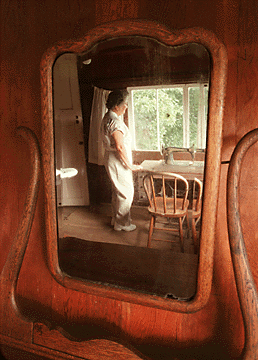
The Uchida home has been restored and refurnished
with items donated by many Kona families. The youngest
Uchida daughter, Fusai, in the sewing room, above, credits
the community with bringing the project to life.
The Uchida Coffee Farm
By Betty Shimabukuro
becomes a living museum
Star-Bulletinany hands joined to restore the home where the Uchida children grew up. They took an old, wooden farmhouse, its out buildings and farmland and made it all new again -- by sending it back decades in time. Very soon, history buffs and coffee aficionados will walk the grounds of a living-history museum, where costumed players will re-enact life in a coffee-growing family.
Daisaku and Shima Uchida
took over six acres of land south of Kailua-Kona in 1913. They eventually built a simple home for their growing family and a coffee-processing shed for their growing business.
Through good times and bad -- mostly bad -- the Uchidas stuck with coffee, diversifying in the '30s by adding macadamia nut trees. With the world changing around them, Daisaku and Shima, and eventually their son, Masao and his wife, Masako, maintained the homestead. They did modernize some -- electricity, running water, yellow shag carpet.
By Ken Ige, Star-Bulletin
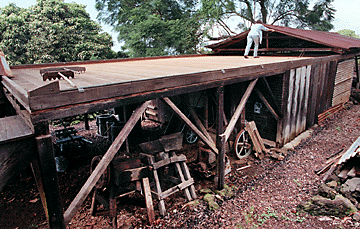
Coffee beans were spread out in the sun to dry. Kona
farmers developed the "hosidana," or rolling roof, which
could be pushed out of the way to allow the beans to dry,
but quickly rolled back to cover the beans if it started to rain.
In 1994, with the elder Uchidas gone and the younger couple preparing to retire to Honolulu, the farm was acquired by the Kona Historical Society, which dreamed of preserving Kona's coffee-growing legacy in the form of a living, interpretive museum. This will happen next November, but in the meantime the farm has been restored to the point where informal tours are already under way.It's been a community effort, with no one person willing to take credit. Farm families throughout Kona donated furnishings from the 1920s to '40s. Retired carpenters, all nisei and former coffee farmers restored the buildings, using techniques from the '30s, the way they once helped their fathers make repairs. For materials they used wood from dismantled buildings of that period (the shag carpet had to be pulled out, as well).
By Ken Ige, Star-Bulletin
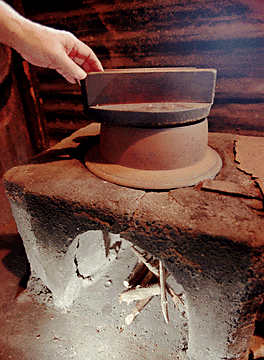
The original family rice pot, or hagama, sits atop the kudo,
or wood-burning stove. When the museum opens, meals
will once again be cooked in the Uchida family kitchen.
This article, you'll notice, quotes no one, which is intentional, as no one involved wants to be singled out. It's a story best told in pictures and a few details, anyway.The home is just a handful of small rooms, including one set aside for study and worship and another for sewing (two sewing machines, for mother and daughter-in-law). The kitchen includes the original kudo, or wood-burning stove, and the ceramic rice pot, as well as a later-issue kerosene stove and a manju steamer, one of several found in area homes and donated to the project.
A few original furnishings remain, including the low table in the front room, where the family ate in the daytime and around which they slept at night.
Outside is an outhouse, furo, water tank and, of course, the coffee-processing plant, where the Uchidas once worked into the night preparing the crop for sale.
The historical society plans to operate the farm just as it was when the Uchidas were in residence, only costumed role players will take their parts. They'll continue the business of growing and milling coffee the old way, and with the daily concerns of raising a family and keeping a home.
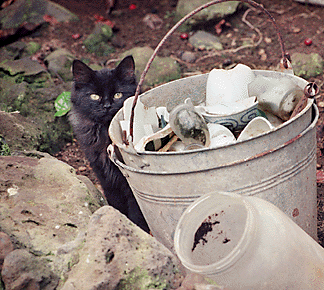
By Ken Ige, Star-Bulletin
A few stray cats have been encouraged to make the Uchida
Farm their home, to help control rats and other pests. This one
is hanging out near a collection of pottery shards -- pieces of
dishware found around the property. At a historic site, even
things that look like trash could have value.
Uchida
Coffee FarmTours: 9 a.m. Tuesdays and Thursdays and by appointment.