
No change noted
in Democratic,
GOP strongholds
The Democrats were strong
By Richard Borreca
on the neighbor islands and in
the less affluent districts
Star-BulletinGov. Ben Cayetano's re-election victory may have been a narrow one, but a computer-assisted look at the race shows Hawaii's Democratic and Republican strongholds haven't changed.
If you look at the House districts that each candidate won big -- by margins of 1,000 votes or more -- it shows Democrats winning in neighbor-island population centers and in the less affluent areas where there are a higher percentage of Asian-American and Polynesian voters.
How candidates for governor did was compared against the results of the constitutional amendment question allowing the state Legislature to forbid same-sex marriage. It appears Lingle captured voters who were less likely to approve the amendment while Cayetano won voters who were more likely to favor the amendment.
The biggest difference, however, was the dramatic separation of ethnic groups.
For instance, Cayetano's big victories on Oahu came in the Wahiawa, Ewa Beach, Pearl City and Kalihi areas.
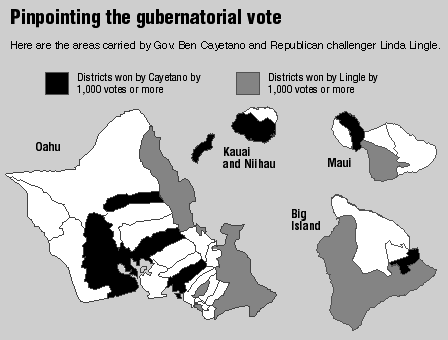
Cayetano's best districts are estimated to be 74 percent Asian-American or Polynesian, while Lingle's best districts are 51 percent Asian and Polynesian. In contrast, Cayetano won big in districts with half as many white residents.They are all areas that Cayetano won in the general election four years ago. Lingle, however, was victorious in the traditional GOP areas in East Honolulu, Waikiki, Windward Oahu and Kihei on Maui.
Election observers, such as Don Clegg, pollster for Cayetano's campaign, detect a change in Republican strength.
"There's a new centrist philosophy that says the obligation of government is to allow me space where I can provide for myself," Clegg said. "It is a different nuance then what a lot of Democrats understand. But Linda appealed to those people."
Cayetano's voters were decidely younger, less wealthy and more likely to be Polynesian or Asian than Lingle's voters, according to the computer-generated demographic data from the state House districts.
Lingle voters live in districts that have shown explosive growth in the last eight years. Her best districts have grown by nearly 16 percent, while Cayetano's districts have just a 2 percent growth rate.
When you compare Lingle and Cayetano districts against the same-sex question, Lingle wins all districts with less than a 60 percent yes vote.
No House district rejected the same-sex question; in other words, every district voted to send the issue back to the state Legislature and not go along with a state Supreme Court opinion that would permit same-sex marriages. The winning percentage varied from 55 percent to a high of 77 percent. The state average was 68 percent.
