

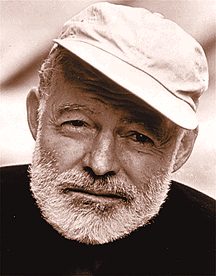
Ernest Hemingway: His book, "A Farewell
to Arms" was one targeted by censors.
"Ulysses" by James Joyce and "The Great Gatsby" by F. Scott Fitzgerald, Nos. 1 and 2 on the list, would both be missing, as would George Orwell's "Brave New World," Joseph Heller's "Catch-22," D.H. Lawrence's "Sons and Lovers" and John Steinbeck's "The Grapes of Wrath," all among the list's Top 10.
 A total of 33 titles on the Modern Library's "best" list were targeted at some point for removal from bookstores, libraries and schools by individuals and groups who found them objectionable. The 17th annual Banned Books Week celebrates the freedom to read and is endorsed by the Center for the Book in the Library of Congress.
Other famous names on the banned list are Ernest Hemingway, Mark Twain, Toni Morrison and Maya Angelou.
Here are a few of the most recent entries on the banned book list and the reasons they were challenged or banned:
 "Goosebumps" series by R.L. Stine. Challenged, but retained in the Anoka-Hennepin, Minn. school system in 1997 because "children under the age of 12 may not be able to handle the frightening content of the books."
"Snow Falling on Cedars" by David Guterson, PEN/Faulkner award winner for 1997. Challenged in the Snohomish, Wash. school district in 1997 by parents who acknowledge its literary merit but complained that its descriptions of sexual intercourse, masturbation and use of obscene language make it inappropriate for high school students.
"Spells, Chants and Potions" by Sue Avent. Challenged at the Muncy, Pa., school library in 1997 because of the book's "magical thinking."
"The Age of Innocence" by David Hamilton. Protested and publicly shredded in Brentwood, Tenn., by anti-abortionists in 1997. The campaign against the book escalated from protests to criminal prosecution on obscenity charges in Alabama and Tennessee.
More information about Banned Books Week can be found online at www.ala.org/bbooks/.

