
Wednesday, July 22, 1998
Variety has made
By Catherine Toth
inline skating a hot new
commodity in Hawaii
Special to the Star-BulletinWITH 27 million inline skaters in the nation, it's inevitable that the sport would catch on in Hawaii. Even 2,000 miles of ocean couldn't keep the latest fitness trend from hitting our shores.
"Inline skating is very popular," said Virginia Hench, president of the Hawaii Inline Skating Association. "And it has been growing exponentially every year in recent history and one reason is that it is non-impact and works the whole body, not just the waist down. And it's fun."
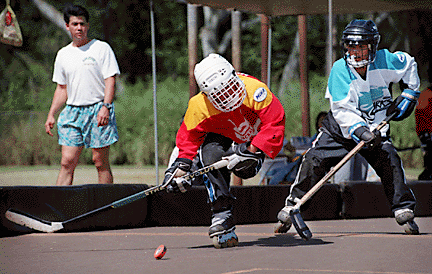
With the variety inline skating offers -- from street hockey to speed skating to even inline basketball -- it was almost predictable that inline skating would attract a diverse following.
"Recreational and fitness skating is overwhelmingly what people mention as their preferred form of skating here," said Hench, whose organization boasts more than 200 members. "And without a doubt, it is the fastest-growing sport in the 35-55 age group. There are a few speed skaters here in Hawaii, and one or two doing 'artistic' skating."
Sales of inline equipment at popular sporting goods stores such as Sports Authority and BikeFactory Sportshop have increased noticeably in the past several years. Much of the industry's success, according to managers, is the national exposure the sport is getting on TV and in magazines.
"The X-Games has helped a lot," said Tommy Chorman, manager of footwear at the Sports Authority on Ward Avenue. "We didn't carry as many brands and styles before. It's definitely been going through some big changes."
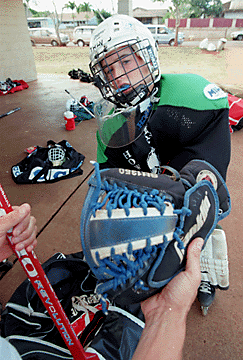
Chorman, who has been with Sports Authority for the last five years, says inline skates aren't geared to a particular age or gender group. A variety of inline skates are on stock for every level, from basic aerobic to hockey to aggressive trick skates, in men's, women's and children's sizes.
"We try to cater to everybody," said Chorman, a recreational inline skater. "We want to get the whole family involved."
Carl Brooks, an assistant manager at BikeFactory, also noted the upward trend in inline skating.
According to BikeFactory's sales, aggressive skates, which feature smaller wheels and grind plates to allow sliding along rails and ramp lips, are becoming more popular, especially with the younger skaters.
"We sell, conservatively, about five to six (pairs of) skates a week, (but) by far, the most popular are the aggressive," Brooks said. "That's where it's going. It's more of an individual sport. Not like hockey, where you have to get a team together.
"And I can say this -- it's a heck of a rush."
Aggressive skating is taking the airwaves by storm, too, with televised events on ESPN and MTV, and street skaters grinding down railings in TV commercials." 'Aggressive' applies to a certain specialized area of inline skating which is somewhat like skateboarding," Hench said. "It involves more stunt-related skating and it's primarily an activity for the very young skaters. You can find them at the Kapahulu Skate Park."
Chris Esper, a 16-year-old aggressive skater visiting from Washington, D.C., was attracted to the newer and rapidly growing skate segment.
"When (inline skating) was new, it was kind of like an unsure thing," Esper said. "It was a fad, a trend.
"But now, it's more like skateboarding.
"Some people skate all day. I used to put on my skates in the morning and skate 'til 10 at night. It's just plain fun."
However, Hench argues that aggressive skating isn't as widely practiced as the other forms of inline skating."Though (the aggressive) form is an 'extreme' form of racing, and while it gets a lot of TV air time, they are still a small part of inline skating overall," he said.
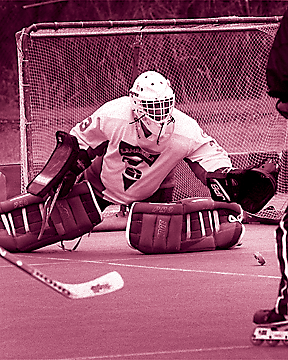
While the trend, at least in sales, is moving towards aggressive skating, inline hockey continues to attract players on the national and local level and has become one of the country's fastest-growing team sports with 3.4 million participants.
"Inline hockey is very, very popular, primarily -- but not exclusively -- with school-age skaters," Hench said.
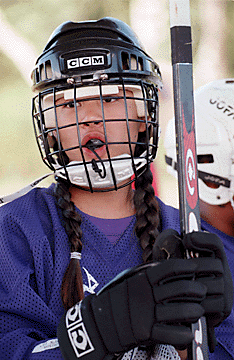
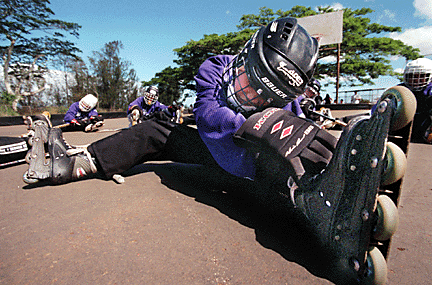
Although the more organized forms of inline skating are increasing in popularity, recreational skating still draws the most participants."It's stress relief," said Pansy Chun, an engineering manager for JMCS, Inc. "You focus on skating and not on work."
Chun, who skates once a week at Kakaako Waterfront Park, enjoys the recreational aspect of the sport.
"It's just good to get out of the office," she said.
Doreen Kitagawa, an emergency medical technician, skates "whenever I can."
"Once you start, you get into it," she said. "It's a great cardio workout."
And according to Chorman, there's no better place to inline skate than Hawaii.
"The good thing about here in Hawaii is that the weather is usually nice, especially in the summertime," he said. "Everybody's doing it now."