
Backyard habitats
aid ecosystemsA dozen back yards in Hawaii have been
By Michelle Cournoyer
certified by the National Wildlife Federation
in a grass-roots program
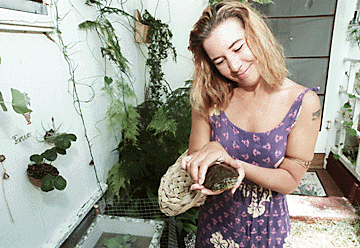
Star-BulletinJahnys Moody cultivates more than Hawaii's natural heritage in her tiny Manoa yard.
She raises awareness of the environment.
"When I moved here eight months ago, the yard was waist-high in weeds," Moody said. "I pulled them all up, tilled the soil and let nature take its course."
She planted Spanish moss, or Pele's hair, like tinsel on the native hala pepe tree to celebrate a communion with her environment.
Joining more than 20,000 schools, individuals and businesses worldwide, Moody had her yard certified by the National Wildlife Federation as a backyard wildlife habitat.
These areas provide food, water, shelter and a place for small mammals to raise young.
The federation has encouraged backyard habitats to get more people to protect the environment and help overburdened government agencies in preservation battles.
The Department of Land and Natural Resources is alloted less than 1 percent of the state's budget to manage its 1.2 million acres of state land and 2 million acres of conservation land. The department encourages residents to protect and provide for the long-term stability of Hawaii's ecosystems.
Moody's yard became the 12th habitat in Hawaii June 8. The first Hawaii resident to join the program was Bill Sager, executive director of the National Wildlife Federation's Hawaii affiliate, Conservation Council for Hawaii.
Sager, a retired state forester, lives near a canal off Kaneohe Bay. His habitat provides for all kinds of native species and is the only one in the nation that includes sea life.
"The neighborhood kids will come over and catch crabs, pulling their legs off and watching them squirm," he said. "That's when I show them my certificate and tell them why they shouldn't be doing that."
Sager is working with local environmental groups to establish special criteria for certifying Hawaii habitats. The national program encourages local members to use native plants, while helping these groups form criteria with goals specific to the local environment.
According to the Department of Land and Natural Resources, 85 of the 271 endangered plants in the country are native to Hawaii.
"The aim in Hawaii is a focus and emphasis on ensuring the native species will thrive, because plants are the only thing we have," Sager said. Many native bird species were lost as the islands became more populated. "Our goal is to make more people aware of nature and help them to understand their impact on it."
Moody's interest was sparked by an advertisement in one of her gardening magazines. She completed the application checklist, logging the names and locations of plants and water sources in her yard.
Her windowsill flower pot holds an abundance of blossoms that monarch butterflies can't resist, she said. The hala pepe tree gives shelter to skinks, lots of geckos and the occasional toad. Scraps of wood she nailed together form nesting sites. Fresh mangoes are placed on a old stump each morning, attracting families of birds.
"It's a really beautiful yard now," she said. "It's relaxing to look out the window and see them enjoying the fruits of my labor."
Hawaii families who want to protect the state's natural resources and wildlife can learn how to turn their back yards into conservation lots. Free booklet helps one to get growing
A new U.S. Department of Agriculture booklet provides families with ideas to attract butterflies, birds and geckos to their yards by creating beautiful gardens.
The 28-page booklet is part of a national USDA effort to help families learn about nature.
Parents will find 10 conservation projects that create wildlife habitats and preserve natural resources. Children will learn how to plant trees and bushes to attract birds that eat garden pests.
The booklet also provides alternatives to using chemicals, such as using fruit and vegetable rinds to fertilize plants.
Booklets are available free by calling (toll-free) 1-888-LANDCARE.
