
Choosing a trainer:
By Tim Ryan
Consider experience, training
and certification
Star-BulletinAre you stuck in a fit
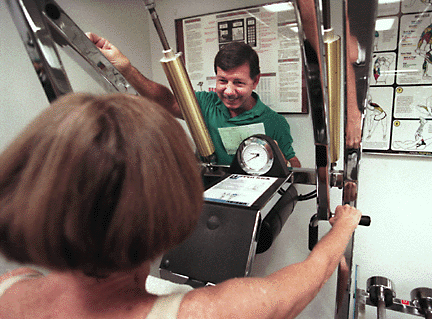
Personal trainers and fitness trainers are everywhere these days. Some work out with clients at health clubs; higher-priced ones will come to your home or office.
"More and more people are using them. It's become the thing to do the last couple years," said Glynis Ramirez, a personal trainer at the Honolulu Club on Ward Avenue.
The advantages of personal trainers should be self evident: Trainers provide motivation, professional expertise and personalized attention, all key components of reaching personal health and fitness goals.
But they'll also help you establish consistent workout patterns: People who make appointments with personal trainers are less likely to make an excuse and miss a workout. And they have more realistic fitness goals, set by trainers who can provide an honest, educated assessment of their potential.
But trainers vary greatly, not only in educational background and cost, but in philosophy, training and consulting practices. Once you've narrowed down a list of potential trainers, talk with the person and ask a lot of questions. These are suggested by fitness experts at the Honolulu Club, Clark Hatch and 24 Hour Fitness.
Why did you become a personal trainer? Personal trainers should not only have a passion for good health and fitness but also want to share their expertise and help others reach their goals.
Later, ask yourself:
Experts in the field warn that some people will pass themselves off as trainers despite having little expertise; others will try to sell more services than needed for the sake of profit.
No state has laws pertaining to the designation itself, said Pete Howard, an athletic trainer certified at Straub Sportsmedicine & Orthopedics on King Street.
"First find out if they're certified," Howard said. "Some people we see (at Straub) have suffered some kind of trauma because they're doing things in a way that hurts them. And you should also ask for references."
Often people don't feel the hurt until a few days later.
"You can do things in the weight room and seem to get away with it until a couple days later when you even can't raise your arm," Howard said.
Local fitness experts agreed that the most qualified trainers combine education, certification and experience.
"Experience is often a better predictor of quality than the type of certification," said Bill Monsen, of Clark Hatch Fitness Center in downtown Honolulu. "And formal education is important as well. The most knowledgeable trainers often have degrees in exercise physiology, biology or a related field."
Another important factor is style. Some trainers are gung-ho military-types; others may emphasize a more holistic approach.
"Trainers have different styles," Ramirez said, "and the client should feel comfortable with that style."


