Special to the Star-Bulletin
Illegal dumps on the Leeward Coast ignore laws that
protect the environment and people.
State moving to
wipe out illegal dumps
It wants jail terms for
By Craig Gima
operators of the sites that
ignore environmental laws
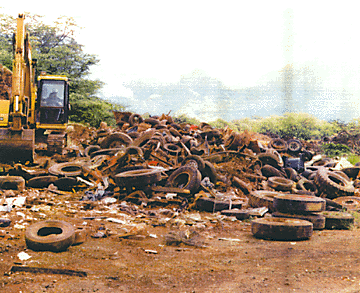
Star-BulletinTrucks carrying roofing material, construction debris or other waste products rumble past the legal landfill at Waimanalo Gulch and end up on a dirt road in the back of Waianae Valley. The trucks will leave empty after dumping their garbage at one of several illegal dump sites in the valley.
Some are run much like legal landfills. Operators collect fees, and bulldozers bury the trash under mounds of dirt and rock.
But the illegal dumps operate without regard to laws that protect the environment and people.
"Who knows what toxic materials they're burying?" asked Steve Olbrich, a retired Waianae dairyman who has been trying to stop illegal dumping.
"This is our environment. This is where my children will live. When you start burying this stuff, you create problems for the future generations."
The state estimates there are more than 20 illegal dumps on the Leeward Coast of Oahu.
"Six or eight would qualify as what we call open dumps, where there is an intentional and continued operation, where stuff is being received and buried," said John Harder of the state Health Department's Solid Waste Management Division.
Other sites include vacant lots where trucks pull in and dump their loads without the permission of landowners.
In July 1996, toxic smoke from a fire at an illegal dump on Puhawai Road caused the evacuation of 15 Waianae residents. Since then, the Health Department has made illegal dumps a priority for the division's two inspectors.
Harder said most of the open dumps identified have ceased operation under pressure from the state. But the bigger problem is trying to clear what has already been dumped and buried.
The cleanup can cost landowners hundreds of thousands of dollars. The money is in addition to civil fines levied by the state.
"We've just kind of given up on trying to track this down under civil penalties," Harder said. "Our primary goal is to stop the operation and to get it cleaned up. So collection of fines has been kind of the lower priority, and (the attorney general's) office has had difficulty with that."
There are thousands of dollars of fines that are uncollected because the businesses and landowners are able to hide ownership and money, Harder said.
Even though the dumps are illegal, the people who operate and use the dumps will not go to jail if caught.
That's one of the reasons the state is asking the Legislature to add a jail term of up to 30 days to the civil fines for illegally operating a dump. The measure would also allow the court to revoke the licenses of contractors and trucking companies that knowingly use illegal dumps.
"If I've got a bigger hammer, hopefully this will discourage this stuff from happening," Harder said.
The bill would not affect those who dump by the side of the road or in vacant lots, but Harder hopes it will discourage the large illegal landfill operations.
"We need to be able to have a little bit of leverage," said Katy Kok of Nani O Waianae, a group working to clean up the valley. "You can do all kinds of education. If there isn't some enforcement, it just doesn't ring home."
Some of the illegal open dump sites stretch over 15 to 20 acres and have been operating for years, according to Harder. Inspectors found everything from tree trimmings to old batteries, and worse.
"You're talking rats, you're talking about 50-gallon drums that are buried that nobody knows what's in them. Over time, they may leak," Kok said.
"If you take it to landfills, you gotta pay," Olbrich said.
"It's a heck of a lot cheaper for someone to say hey, you can dump it on my land."
Harder said licensed contractors support the measure because those who use illegal dumps can undercut legitimate construction firms.
"It provides a level playing field," he said.
"As the fees at our landfills go up, there may be more of an inducement for people to use illegal dumps," said Eugene Lee, program coordinator with the city's Department of Public Works.
Lee said jail time and the potential loss of a business license would counteract the economic incentive to violate the law.
"It seems like it's getting worse now. As the economy gets worse, illegal dumping gets worse," Olbrich said. "I wake up in the morning, there's four or five dump loads of dirt, and who did it no one knows."