By Dennis Oda, Star-Bulletin
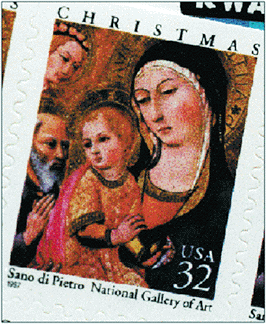
Holiday stamps brighten the season, but poorly
wrapped packages can spell trouble.
A post office 'wrap master'
By Mary Adamski
tells the dos—start with a sturdy box
—and don'ts of holiday packagingStar-Bulletin
A fringed white shawl, mailed from the Big Island to a Florida address, bulged out of its ripped wrapping. Lacking a box and covered with just a sheet of paper, it got only as far as Honolulu. Another package headed for Kaneohe had the handwritten instruction "Handle With Care," but the Minnesota sender didn't take her own advice.
Inside, a stack of flimsy gift boxes bound by brown paper got smashed along the way, probably beneath the weight of heavier parcels.
Meanwhile, dozens of boxes melted down by exposure to water were piled in 10 canvas hampers. All were awaiting the attention of Jose Santa Elena, described by his supervisor as "the main man of rewrap" at the Honolulu Airport postal station.
A 15-year veteran of the postal service, he has specialized in saving such victims since 1991.
By the end of every workday in this package-intensive time of year, Santa Elena will send about 300 redone parcels on to their destinations. Some of the parcels just need tape. Some he puts in new boxes. Some are open and empty and go on to another office where postal workers try to fit spilled goods and empty packages together.
"The only things he can't fix is if they have no names," said Glenn Villegas, supervisor of distribution operations at the sprawling U.S. Postal Service terminal.
Santa Elena could write a primer on "how not to wrap packages," just listing what he sees in a day's work.
He put the shawl into a sturdy box, which he said is the No. 1 priority.
No. 2 is to fill all the empty space inside, surrounding smaller gifts with paper or plastic-foam padding.
"Don't put a small package in a big box. It gets crushed all around if it's not filled up," Santa Elena said. "No packing and something can rattle until it breaks."
He spent quite a while wiping a sticky green liquid off several boxes from one mailbag. The "culprit" was a box headed from Tennessee to Hilo, with what smelled like Auntie Somebody's mint jelly oozing out a corner.
Santa Elena didn't need to open the box to know the liquid wasn't properly sealed and secured.
"People don't take good care with food," he said. He frequently sees smashed and rotting fruit -- which mainland senders don't realize must pass state agricultural inspection.
Some senders also don't know that mailing gifts of alcoholic beverages is illegal, a violation of Federal Aviation Administration rules against shipping flammable materials.
An increasingly popular form of packaging is the flat-rate Priority Mail envelope, which costs $3 to send no matter what weight.
Villegas said the envelopes are showing up in the rewrap office in growing numbers because of the things people try to stuff into a document-size space. "We've seen people try to ship metal parts that protrude out the ends."
But weather is the major villain, Santa Elena said. "Just getting wet was the main problem for most of these. When we get it from the airlines, it is already wet." Not even sturdy corrugated cardboard survives being parked in the rain on some runway.
He uses clear plastic sheeting to seal a damp and crumpled box, a message in itself to package wrappers. Waterproof wrapping would add a measure of protection.
At the very least, clear tape over addresses would protect against blurring or obliteration.