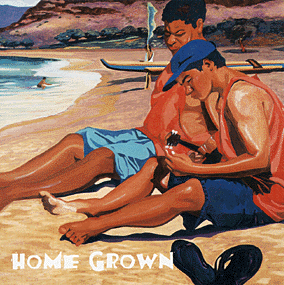
Ukulele photo by Dean Sensui, Star-Bulletin Mark N. Brown of Kalihi designed the cover for
this year's Home Grown effort, depicting a beach scene
with a teen strumming on a ukulele, an instrument that
is resurging in popularity with youths.

By John Berger
Special to the Star-Bulletin
It has been 21 years since "Whodaguy" Ron Jacobs returned to Hawaii and introduced the "Home Grown" concept to island music with three smashingly successful albums at KKUA. The albums contributed to KKUA's reign as Honolulu's major Top 40 station of the mid-1970s, generated more than $200,000 for Habilitat, and gave several dozen performers and songwriters a shot at stardom. Jacobs' KKUA colleague, Kamasami Kong, later used the same concept, -- with Jacobs' blessing, to create the "Brownbags To Stardom" contest for I-94.
Home Grown '97 Various artists (no label, no serial number) Available in CD and cassette
Jacobs' "Home Grown '97" sets a new standard for local anthology albums: 21 songs and more than 70 minutes of original music. Cost of CD is $9.63; it went on sale Friday. Proceeds benefit Habilitat. (A 20-page liner notes booklet is available from Habilitat for 55 cents postage. ).
The artists range from veteran professionals Tito Berinobis and Gail Mack to teenage Oceanic Road To Fame winner Loeka Longakit. They come from Kauai, Oahu, Maui and the Big Island. The music ranges from local pop to hard Hawaiian rock.
The most striking and instantly memorable songs reflect that diversity. Eddie Lopez' "I Like Lychee" is a brilliant burst of whimsical energy that exemplifies Hawaiian-Caribbean music at its best. Kaohu Mattoon's "Keiki" is excellent hard Hawaiian rock. "Maunawili Lullaby" is an exquisite collaboration by composer/guitarist Nathan Hatico and vocalist Katy Furuya.
Patriotic songs are often either saccharin or contrived; Gordon Freitas' "Peaceful Arizona" is neither. The crew of the sunken battleship finally has a requiem.
Country music gets its due with Charlene Dyer's imaginative "Aloha Howdy Do" beautifully embellished by steel guitarist Ken Emerson.
Bart Bascone was a "Home Grown I" winner with "Makapu'u" in 1976; "Going To Molokini" repeats the sound and style of his old hit. Tahiti Fernandez makes a memorable debut singing Cecilio Rodriguez' "Mahalo (For The Sunshine Of Your Love)." Tommy Tokioka's rhythmic "Sweet Island Flower" comes alive when heard on headphones. Jeff Kloetzel's "Piko Baby" is sunny silly fun.
Tito Berinobis on "My Hawaiian Moon" and Manny Cabral's "Ku'uipo Goodbye" add original, easy-listening love songs to the collection. Credit Cabral with a definite classical ambiance. Composer Sean Naleimaile and several friends are heard on the sole Hawaiian-language song, "Na Leo I Kamakani," which calls on Hawaiians to be aware of their heritage.
Dino Bee's catchy ode to "Pauoa" is one of several place songs. Emerald House's "On the Windward Side" celebrates country living with coed harmonies and light rock beat. Kai-Nalu gets a major assist from Pierre Grill as they second that emotion with "From The East Side." E&C Country Hawaiian Music echoes the classic sound of Kalapana and countless Kalapana acolytes with "In The Country." Gail Mack and an all-star band commemorates "Hamakua," and Loeka Longakit embraces the entire state with his languid "The One They'd Call Hawai'i."
Pacific Breeze's "Rock 'n' Roll Hawaiian Style" is a catchy vista of local living and "playing music to unwind" that features Kevin Uyehara on ukulele. Toa's "La'ie Girl" adds Polynesian-style soul to the collection.
Kalihi's Mark N. Brown completes the package as this year's winner in the artwork category. He perpetuates the tradition set 20 years ago by winning artists Don L. Robertson ("Home Grown") and Wren ("Homegrown III") in being essentially self-taught, although he now teaches and paints professionally. His study of two island youths playing ukulele on the beach is both timeless and topical. Hawaii's people have enjoyed the beach, the surf and the ocean for countless generations, but the ukulele is more popular with teens these days than it's been for years.
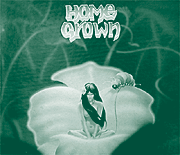
Cover of the first Home Grown album recorded 21 years ago.
Those looking for a deeper kaona (hidden meaning) in Brown's winning cover might consider this: Kids playing uke on the beach one year could be "Home Grown" winners the next.There is naturally some room for improvement. Several songs would sound much better without synthetic string sections whining intrusively as sonic filler behind the performers. Those are notable but minor flaws in a landmark local recording.
Credit Frank Day with an outstanding job in taking recordings from 21 different sources and creating a sense of unity without losing the individual artists' intent.
Credit Jacobs with a masterpiece. Waytogo, Whodaguy!