Shoots!
so plastic
Takasho Co. photo
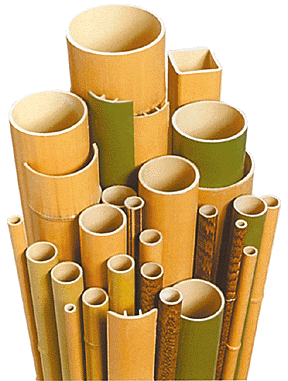
Plastic bamboo is available in an array of colors and sizes.
Fake bamboo costs more than the real thing, but lasts longer
By Jerry Tune
Star-BulletinA new vinyl bamboo is coming to Hawaii from Japan, and its importers say the catalog has 1,600 different products including everything from fences, benches, gates, screens, to carport covers. Raku International Inc. recently announced it is distributing the new product, called "Ever Bamboo," and is sending out letters to architects, interior designers, landscapers and garden supply stores.
The plastic bamboo isn't cheap-it costs about twice as much as real bamboo-but it lasts much longer. For a 6-foot-wide by 6-foot-high panel you can figure about $100. If you want a 4-foot-long bamboo bench, the kit will cost about $300. A real bamboo bench is available at about $150.
The manufacturer is Takasho Co. Ltd., which puts out a 321-page colorful catalog showing all of its product line.
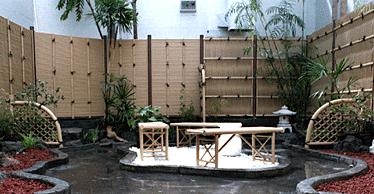
"It's been used in Japan for five years," said Osamu Hayakawa, Raku International vice president who operates out of a small shop at 311-A Kamani Street in Kakaako. An interior garden at the shop showcases many of the vinyl bamboo products.
By Kathryn Bender, Star-Bulletin
A showroom at Raku International in Kakaako displays some of the 1,600 products available in plastic bamboo, including fences, benches, gates and screens.
"Ever Bamboo eliminates the many disadvantages that natural bamboo has," he says. "Ever Bamboo is made of AAS plastic that is widely used in the severest climate to ensure durability. Typical applications of AAS are solar energy heating systems, automobile exterior parts, signboards, traffic signs, etc. It won't discolor, crack, rust, stain, or decay while natural bamboo gets damaged by rain, moisture, and wind over time."Ever Bamboo is modeled after the wild bamboo found in the Japanese mountains. You can get it in an old look, a young look, or even a green bamboo look. The bamboo comes in many different sizes, from about 3/4-inch rounds to up to 4-inch rounds.
There is an exterior version, which can be from 10 millimeters to nearly 30 millimeters thick, and an interior version, made from inflammable ABS plastic for safety in home use, Hayakawa says.
The most common way to buy the bamboo is in panels, mostly about 6-feet wide, but you can also buy individual pieces, he says.
The 1,600 different products also include artificial plants and trees. The panels are framed in vinyl beams that look like wood.
Hayakawa thinks his new product line will go over big in Hawaii for a variety of uses: to cover over hollow-tile walls, for condominium lanais, and for anyone who wants to create the peaceful feeling of a Japanese garden.
Contractor for residential and commercial installations is Swan Building Gardens International, a company that has created artificial rocks and ponds for gardens in the United States and many Asian countries.
Tom Stoddard, the company owner, got involved with the vinyl bamboo after restoring a Hawaiian 'auwai (ditch) system in Nuuanu for Ron Fujitake, owner of Raku International.
The company has been known for its leather bags, and Japanese tourists come to Kakaako to shop at the company's outlet store. Hayakawa says that store will be moving to the end of the building in order to open up space for the line of bamboo products.
Stoddard recommends using a lubricant on the vinyl bamboo monthly or bi-monthly to protect it just the way you would your car's vinyl dashboard.
Hayakawa says it takes four to six weeks for delivery of the vinyl bamboo from Japan.