By Craig T. Kojima, Star-Bulletin
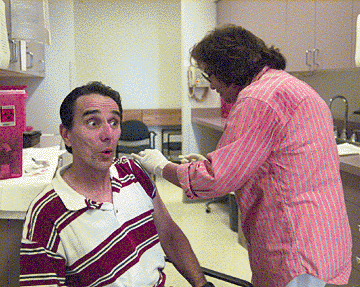
Alfred Silva braces for a flu shot from Josie Amigleo
at the Kaiser Permanente Clinic in Honolulu. He was
among hundreds of people who got the shots yesterday,
hoping to ward off the illness.
Isle citizens urged
to get flu shot
Health officials hoist the alert
By Jaymes Song
after 12 confirmed influenza cases
Star-BulletinAnn Sturley didn't get a flu shot last year. She was sick "so many times." Not so this year. "My mother said: 'You better get it before you come visit me,'" said Sturley, a 47-year-old nurse from Manoa who winced slightly as the needle of a syringe pierced the skin of her thin arm.
Sturley was one of hundreds of people yesterday filing into the Honolulu Kaiser Permanente Clinic to receive a shot, hoping to avoid the flu this season.
Federal and state health officials are recommending that people, especially the elderly, get flu shots within the next month.
The advisories come after 12 confirmed cases of influenza at a Windward Oahu nursing home.
"It's a debilitating illness that is potentially life-threatening," said Dr. Vernon Ansdell of Kaiser Permanente. "Nursing homes should always be concerned. If there is one case, it could spread like wildfire."
According to the Centers for Disease Control and Prevention in Atlanta, 20,000 people die from the flu each winter.
Last year, Hawaii recorded 349 deaths related to flu and pneumonia, with the vast majority being seniors.
Julie Aki, a Kaiser Permanente nurse, said the Honolulu clinic has been very active since it started administering the flu shots this season on Sept. 6. The clinic has averaged about 300 shots on weekdays and 800 on Saturdays.
A state Health Department spokesman, Patrick Johnston, said the number of seniors getting flu vaccinations in the state mirrors the 8 percent increase nationwide between 1993 to 1995. In 1995, 58 percent of Americans aged 65 and older had flu shots.
The state Department of Health last month announced the early arrival of the flu season.
Ansdell said the flu season is normally between November and February, but noted that Hawaii's flu seasons can be sporadic.
"It could come anytime," he said. "There's no obvious winter or summer season like the mainland, so it's less predictable."
Medical professionals are primarily targeting seniors because of their weaker immune systems.
But everyone should consider getting the shots, Ansdell said. Occupations that involve regular contact with people, such as the health, hotel, restaurant and airline industries, should definitely get vaccinated.
Symptoms of the highly contagious viral infection include high fever, muscle aches, sore throat and cough. It is transmitted through sneezing or coughing.
The vaccine usually takes about two weeks to develop in the body and lasts for less than one year. It boosts the immune system to reduce the risk of contracting the virus and minimizes the symptoms. The shot, however, is not a treatment for the flu, Aki said.
"Usually, when it's a full blown epidemic, it's already too late," Ansdell said. "They have probably already been exposed."
Ansdell said the biggest myth about the vaccination is that some people believe they can contract the virus from a flu shot.
"I hear it all the time," he said. "It's completely false. You can't get the flu from the flu vaccine."
Good health habits
Eat a well-balanced diet with extra fruit juices.
Avoiding the flu
Where to call