Residential service would go up
By Rob Perez
38 percent on Oahu and
more on other isles
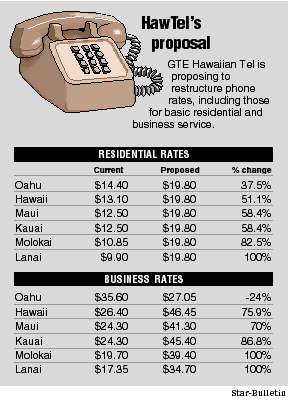
Star-BulletinGTE Hawaiian Tel wants to raise the cost of basic phone service nearly 38 percent for Oahu residents and by much steeper amounts for neighbor island households. At the same time, it is proposing to significantly reduce interisland toll rates, the cost for a business line on Oahu and charges for custom-calling features.
Those are among numerous and far-reaching changes the utility is proposing in a filing with the state Public Utilities Commission.
But the plan already is under attack from the state's consumer advocate.
Chuck Totto said the utility's numbers don't add up and its methodology of calculating costs is flawed.
"These are not reasonable rates," he said.
GTE says it needs to restructure its rates to bring them more in line with the actual cost of delivering service -- something the company considers crucial in the face of increasing competition.
For years, rates for interisland calling and other services have been set artificially high to keep the cost of basic service artificially low, said Robert Tanimura, GTE's section manager for rate design.
"It works out great in a monopoly environment but not in a competitive one," Tanimura said.
But Totto and other critics dispute that notion, setting the stage for the commission to determine whether such subsidies are built into current rates and whether those rates need readjustments.
If GTE's proposal is approved, the cost of basic residential service would be set at $19.80 a month on all islands.
Oahu residents now pay $14.40, while the rate ranges from $9.90 on Lanai to $13.10 on the Big Island.
Interisland toll rates would drop to 6.5 cents per minute during peak hours and 5.5 cents off-peak. Current rates range from 35 cents to 9.4 cents depending on when the call is made and the duration.
The cost of a business line would drop 24 percent for Oahu customers but soar 70 percent to 100 percent for neighbor island businesses.
The commission earlier this year authorized GTE to raise rates enough to generate an additional $23.6 million -- something customers are now paying through a 10 percent monthly surcharge. The surcharge was instituted on a temporary basis because the commission wanted to deal separately with GTE's desire to rebalance rates for individual services.
But instead of filing a separate request for the rate restructuring, the utility included its proposal in a massive filing in another case before the commission.
That case deals with major unresolved issues, including rate restructuring questions, that must be decided as Hawaii's telecommunication markets open to competition.
Jeff Maldonado, associate general counsel for the company, said GTE lumped its rebalancing request into the second case because the issues, including what wholesale rates GTE must charge competitors, should be considered simultaneously.
Otherwise, GTE and its ratepayers would suffer because the utility would unfairly lose customers to competitors that are able to undercut GTE's artificially high rates, Maldonado said.
In the interisland toll business, GTE already has lost about 50 percent of its market share since competition arrived in 1995, Tanimura said. GTE's filing strategy caught commission staffers by surprise and has created some confusion on how the case will proceed. Public hearings would have to be held throughout the state before the commission could decide on any rate changes.
"GTE is really trying to play this very low-keyed," Totto said. "It's really super confusing."
Some of the other GTE proposals:
Establish an optional toll-based local service charge for residential and business customers who use their phones infrequently. On Oahu, they would pay 40 percent less than the monthly flat rate but would be charged for each call at a rate of 3 cents for the first minute and 1.5 cents for each additional minute.