

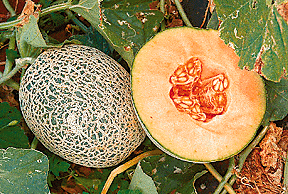
The melon is sensuous: its rounded proportions, the silky texture of its flesh, the musky sweetness of its juices. The melon
deserves our respectBut it gets no respect.
Think of how we speak about melons: "Use your melon," "melon head" -- you get the picture. Melons deserve better treatment.
After all, how many bits of edible pulpy masses have their own national holiday?
Well, they do in Turkmenistan.
A former Soviet republic just north of Iran on the Caspian Sea, Turkmenistan marks the second Sunday in August with a national melon love fest.
A taste of melon actually brought a tear to Emperor Baber in 1519, Benjamin Watson writes in "Heirloom Vegetables." He had stopped for a snack after conquering India (hard work, you know, and melons would be great to help replenish electrolytes lost during battle). The taste reminded him of home, apparently.
Melons, as do all fruits, achieve their peak flavor when ripe.
When choosing a cantaloupe, take a sniff. It should have a sweet, musky aroma. The rind should have a golden netting covering a creamy yellow background (if the background is green, it's not ripe), and the surface should have no dents or bruises. It should yield only slightly on its blossom end when pushed. Honeydews also should feel soft-ish when pushed on the blossom end. They should be creamy light green or yellow-tinged.
Whole melons last for up to a week stored at room temperature.
Most supermarkets have good buys on melons this week. Sack N Save has cantaloupes at 37 cents a pound with a Maika'i card while sister store Foodland prices them 38 cents with the card, 59 cents without. Star has honeydews at 49 cents a pound while Times weighs in at 59 cents for honeydews and cantaloupes. Safeway low-balls in at 3 pounds for $1 for cantaloupes.