

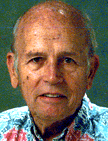
I wrote Tuesday of the amazing recovery at Queen's Hospital of a badly beaten tourist visitor, whom I knew as a friend of friends. He and his family feel his trauma surgeon, neurosurgeon, plastic surgeon and wonderful staff support did the near-impossible in restoring his battered body. A high grade for
Hawaii’s health careNow let me tell you about another positive experience reflecting well on the quality of medical care in Hawaii -- my own 3:30 a.m. visit recently to the emergency ward at the Kaiser Permanente Moanalua Medical Center.
With the chest inside this 76-year-old body feeling ever more congested, as it had in a "silent heart attack" nine years ago, I told my wife about 3 a.m. a trip to emergency seemed in order. She called ahead to describe my problem and give my medical record number, then off we drove. At emergency, after a short wait, I presented my Kaiser card and signed a form saying I'd be liable for expenses if I was a gate crasher. Thank goodness I wasn't. What followed could have been itemized into thousands of dollars. Instead it was "no charge."
Blood pressure. Pulse. The first of three electrocardiograms. A chest X-ray from a machine brought to my bed. Blood samples. Shunts placed in my arm for feeding in medications intravenously if necessary. A tiny plastic nasal oxygen tube to help my breathing. A nitroglycerin pill to open up my veins. Nitroglycerin patches on my upper chest, too.
All this by a crew of male and female nurses and staff attendants who ranged from bruisers to a sweet young thing. Each explained what he or she doing. Getting one needle into the right place was so tough four or five of them gathered to watch a third person try and succeed. The hurt was minimal. Staff rotated among patients, guided by instructions received away from our presence and by data posted at the foot of each bed.
Finally the friendly doctor in charge of the shift, Paul Raykov, appeared with the X-ray. It showed lots of fluid in my chest, dumped there by a heart acting up as it had nine years before.
To get the fluid out I needed a massive shot of Lasix to force me to urinate. Raykov said I had a choice of asking for a bedpan every five minutes or accepting a penile catheter. For the next few hours the fluid from my lungs moved steadily into a plastic bag. Surprisingly, no great discomfort.
Soon after the shift changed at 6 a.m. the new personnel, all well briefed, told me I'd graduate to a bed in the hospital a few hundred feet away. I made it in time for breakfast, standard menu. While a nurse cut my pancakes I phoned my wife to remind her she had never done the same at home. I had three good meals that day and was hungry for all of them. No complaint from this corner about hospital food.
PROCEEDINGS in the hospital included visits from my personal physician, whose office is close by, a visit from a heart specialist after an ultrasound machine gave him video pictures of my heart at work, and a video film on staying away from salt and getting more rest.
Printed materials and two nurses repeated the low salt/high rest message.
It was one of the busier, more fascinating days of my life. Rest, hah! There was activity all the time.
When there weren't people popping in, the phone was ringing or the blood pressure cuff was inflating itself automatically.
My roommate had outlasted several one-day visitors already. When he heard I was another short timer he joked about wanting more permanent relationships.
The bottom line is that I had a pretty serious problem but I was road-ready again in 15 hours. Like an old car I could drive out of the repair shop and expect pretty good mileage ahead if I keep up proper maintenance.