Sting to target stores
selling tobacco to kids
A survey found more than 40 percent
By Helen Altonn
of isle outlets sold cigarettes to juveniles
Star-BulletinRetail clerks illegally selling cigarettes to minors may soon find themselves in court through Operation K.A.T.S. - Kids Against Tobacco Sales. A sting operation on Oahu using undercover police was announced today in an inter-agency effort to enforce laws prohibiting tobacco sales to minors. The Honolulu Police Department is collaborating with the state Health Department's Alcohol and Drug Abuse Division and the University of Hawaii Cancer Research Center in the crackdown.
The Honolulu Prosecutor's Office and Family Court also are involved, said Capt. Louis Marrero of the Juvenile Services Division, coordinating Operation K.A.T.S. for the Police Department.
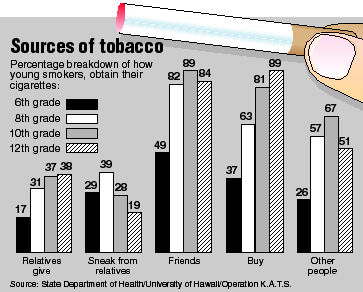
Despite laws since 1987 prohibiting tobacco sales to minors, teen smoking has increased and many say they have no trouble buying cigarettes, said Elaine Wilson, chief of the Alcohol and Drug Abuse Division.
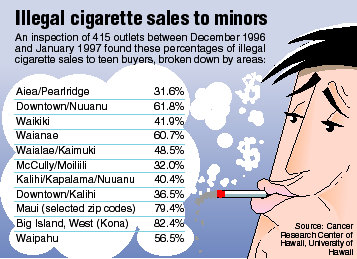
Teen-age volunteers were able to buy cigarettes at more than 40 percent of 415 tobacco outlets inspected during December and January, said Karen Glanz, with the Cancer Research Center.
Every outlet selling tobacco was inspected in certain areas, she said. Noncompliance rates ranged from 31.6 percent in Aiea-Pearlridge and 32 percent in McCully/Moiliili, to 60.7 percent in Waianae, 79.4 percent on Maui and 82.3 percent in Kona on the Big Island.
Despite about 1,200 random inspections of outlets in 1-1/2 years with follow-up letters and merchant education, she said that the noncompliance rate "is going in the wrong direction ... What's been missing is a consequence."
That will come with Operation K.A.T.S., Marrero said, describing how about a dozen undercover officers will work with volunteer teens and adults to detect salespeople violating the law.
"Our concern is once kids start with cigarettes, they may go to higher illicit drugs," he said.
Citations will be issued to individuals selling tobacco to minors, with fines of up to $100 for first violations and up to $1,000 for repeat violations, Marrero said. Wilson said, "The person who has to stop selling is the person at the cash register. For a clerk, $100 is a lot of money."
The stores won't be cited but will be notified of the results. Those following the law will be commended, the officials said.
Glanz said education efforts will continue to help merchants and clerks learn how to identify juveniles and "handle difficult situations." (Merchants wanting information, signs or other help may call the Health Department, 586-4613.)
The violations aren't unique to mom-and-pop stores but also occur in large markets and chain stores, even those trying to educate clerks about the tobacco laws, Glanz said.
Often, tobacco sales to juveniles aren't done to make money but "because it's difficult to say no," clerks are busy and careless or think it won't hurt, she added.
Wilson said the operation is modeled after a program in San Jose, Calif. After one set of stings, she said, tobacco sales to teen-agers fell below 20 percent.
Federal law requires states to reduce sales of tobacco products to juveniles to 36 percent by June 30, and to 20 percent by the year 2000, Wilson said.States that don't meet federal requirements could lose up to 20 percent of federal funding for alcohol and drug abuse programs, she said.
The percentage of high school students who smoke on one or more days a month has increased from 28 percent to 34 percent in three years, according to a survey last year.