
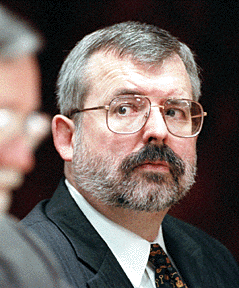

Circuit Judge Wilfred Watanabe yesterday ordered Foley, 49, to serve 10 years for negligent homicide in the death of Ho Pin Tsai, 33, and five years for negligent injury to his wife, Thianh Luu, on Jan. 4, 1995. The terms will run concurrently.
The Hawaii Paroling Authority, which sets the minimum time for each sentence, starts with five years in drunken-driving cases with a death, said Al Beaver, chairman of the authority board.
"We've got to be consistent," Beaver said after Foley's sentencing.
"That way you make it fair. It doesn't matter if the defendant is a billionaire or has a dollar in his pants."
Beaver said the board weighs the severity of the offense, the defendant's criminal history and the defendant's character before and after the incident.
He said he puts more emphasis on the defendant's attitude before the offense, adding: "What he has done since then doesn't weigh that much with me."
During the sentencing, Michael Weight, Foley's attorney, focused entirely on Foley's efforts to rebuild his life and contribute to the community since the incident.
He asked for five years of probation during which Foley would use his legal skills to raise money for centers to treat what may be hundreds of children addicted to drugs or alcohol.
Weight called witnesses to testify on Foley's ability to raise money, the need for treatment centers and the effects of alcoholism, from which Foley and his father suffered.
"The Tom Foley who emerged from the carnage of that night is a very different person," he said, saying Foley stopped drinking, financially contributed to the victim's family and contributed to community causes.
Weight also cited a letter from the victim's family, saying Foley had taken responsibility for Ho Pin Tsai's death and that sending Foley to jail wouldn't bring back the deceased. The letter also said Foley could not continue to pay restitution if he were in jail.
Watanabe rejected Foley's argument, saying he didn't think it was a good practice to impose sentences based on services defendants could do.
He also said anything less than prison would depreciate the seriousness of the offense.
Foley faces immediate action by the Office of Disciplinary Counsel, which will restrain him from practicing law when it receives a certificate of conviction from the court.
Deputy Prosecutor Chris Van Marter said the state could have asked for extended, consecutive terms totaling 30 years. But he said the 10-year total was reasonable and reflected the egregious facts of the case.
"Mr. Foley should be sentenced for what he did on Jan. 4, 1995, and not who he is," Van Marter said. "He should be sent to prison for killing a person and seriously injuring another."
Carol McNamee, Mothers Against Drunk Driving spokeswoman, said Foley had taken a giant step in his recovery, but said good intentions should not override sanctions.
"If there's a death, there should be jail," she said. "A person needs to suffer consequences."
But she also said Foley represented a system failure, saying he didn't receive treatment before he caused a death.
On the night of the crash, Van Marter said, Foley had six drinks with vodka and water from 5:15 to 8:30 p.m. and stopped at four other bars before the midnight accident. He said Foley was going about 70 mph and showed no signs of braking when he slammed into the couple's car.
Van Marter said Foley had a blood/alcohol level of 0.3 percent, more than three times the then legal limit of 0.1 percent.