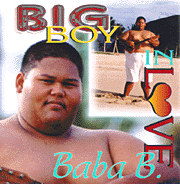
 SEAN Na'auao has come a long way as both recording artist and record producer since leaving Mana'o Company. It was less than a year ago that one of his discoveries, Darren Benitez, scored a surprise win as Most Promising Artist at the 1996 Hoku Awards. Now Na'auao is back with another promising find - Waianae's multi-talented Baba Badoyan,
a k a Baba B.
Baba wrote five of the 10 songs on this debut album. He also wrote new lyrics for "Take Me Back" so that the neighbor island anthem that originally celebrated the Molokai Slide now touts the Waianae Valley Slide.
Baba plays ukulele, but Na'auao handles most of the instrumental work with support from Michael Grande (keyboards), Jon Porlas Jr. (percussion) and Konrad Kendrick (drums). Several arrangements use catchy variations of the familiar Top 40 rhythms and melodic progressions of the early 1960s. The title song is particularly good. It is polite yet soulful with an overlay of Caribbean nuances as well. Many young guys will relate to the emotions shared in the song.
Guitarist Ata Magallenis joins in on "Makaha." The lyrics suggest Baba got impatient waiting for Troy Fernandez to write a song about Makaha for the Ka'au Crater Boys. (Among the places Baba slams is one of Fernandez' favorite surfing spots). Magallenis returns on another powerful original, "Over On The Westside," as Baba restates the message: Waianae no ka oi!
That song should already be getting big play on "island music" radio stations, but the song most likely to become a hit is yet another original, "Iz I Want To Be Like You." It's a catchy neo-'60s tribute to the big man himself.
Baba does nicely with remakes ranging from "Water Runs Dry" to "Wai O Ke Ani Ani" but it's the originals that make "da Big Boy" a notable discovery.
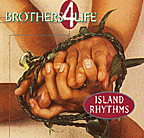 ISLAND Rhythms' third album was released with a surprising lack of fanfare late last year. The secrecy is puzzling. Yes, there are times when the quartet still sounds like a junior varsity Kapena or Ho'aikane lite, but there isn't really anything on this album to be ashamed of. Even when they affect Jamaican accents the material is original.
Guy Maeda contributed to the previous albums, but all 11 originals here were written by Rodney Bejer.
Among Bejer's best is "Pink Champagne," a catchy and commercial portrait of a hard-drinking local party girl. "Why Should It Matter" and "Someone Out There" show his skill writing local pop ballads. The latter could become a popular lovers' theme.
"Ready 4 A Goodtime" teeters on the verge of being a Jawaiian cliche but sounds like a great opening number for concert performances. "Reggae Rhythms" blends Hawaiian and Jamaican ideas creatively. "E Pili Mai" is the one selection Bejer didn't write; studio guitarist Terrance Langsi contributes the guitar solo in a beautiful arrangement of this contemporary Hawaiian classic.
The album closes with Bejer's beautiful unplugged celebration of friendship, "Brothers 4 Life" (Bejer, Maeda and Ryan Bonifacio are joined by Kapua Galletes who replaced Sean Cordero as the fourth member). The song could easily become as big as Na Leo Pilimehana's hit, "Friends."
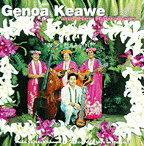 AN album with the same title and the same 12 chalang-a-lang and hapa-classics was released in low-budget form several years ago by another label. U'ilani Productions' producer Dr. SDK Nalua'i has upgraded it by using an attractive photo of Keawe and her group as the cover art, and by adding the song lyrics to the liner notes. With songs like "Kauoha Mai," "KHBC Hula" and "Makee 'Ailana," and a couple of guest vocals by Gary Aiko, the upgraded edition is a near-perfect introduction to the music of one of Hawaii's great vocalists.