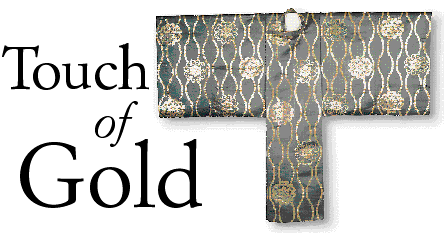
A new exhibit at the Academy of Arts
glitters with the clothing of
Old World cultures
Stories By Burl BurlingameStar-Bulletin

Add to that the fineness of pure gold metal - and we're talking REALLY fine: an ounce of gold can be hammered into 300 square feet - and you've really got something. The Honolulu Academy of Arts' "A Touch of Gold; Special Apparel East and West," opening Thursday, hangs more than 40 golden outfits like so much fine art.
The clothes come from around the Old World - Japan, China, India, Indonesia, the Middle East, Europe, everywhere but the Los Angeles Lakers. The exhibit is curated by Reiko Brandon, who chose the outfits out of the museum's Textile Collection and from the Christensen Fund Holding, a collection on permanent loan to the Academy.
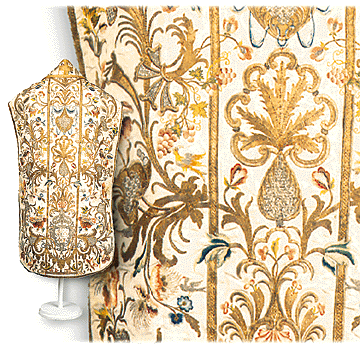
The pieces dates from the last three centuries.
A Japanese Noh performer might wear golden brocade emblazoned across a pellucid silk background to suggest a certain spirituality, or feature embroidered flying cranes (a sign of long life) to signal the character's regal importance, or even have golden waves splashing across trousers to hint at samurai virility.
From China, a Taoist priest robe, and a crimson wedding robe from the Qing era depicting Manchu dragons. From Mughal India, an elephant's decorative trappings. From Banaras, golden saris with threads gleaned from burning old saris.
From southern Europe, a 1751 chasuble with deep ornamentation echoing the complexities of Catholic faith. From Albania, a festival costume limned in Turkish motifs.
Unlike your uncle's World War II uniform, these clothes have held up well over the years, thanks to the durability of gold. Even if the gold in the outfits isn't pure - it's typically leavened with silver or other metals - the gleam and deep color are unmistakeable, and gives the viewer a lasting idea of the way we wore, way back when.
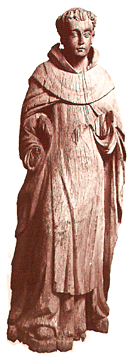
The first missionaries were Augustinian, followed in short order by Franciscans, Jesuits, Dominicans and then Augustinian Recollects. All of the these groups used graven images to spread the gospel, with most of the sculpture produced by Filipino artists.
"Santos: Religious Art From the Republic of the Philippines," is a Honolulu Academy of Arts exhibition that draws together dozens of of these sculptures, most centuries old, and most depicting saints that became popular in the Philippines, such San Roque, the people's protector against illness, and San Isidro, patron of big harvest.
What: Touch of Gold. Also, Santos: Religious Art from the Republic of the Philippines
1 to 5 p.m. Sundays