On refrigerators and freezers, the coils found under the unit should be cleaned at least once a year to maintain maximum cooling efficiency, maybe more if you have pets, said Asao Nishibe, manager of the Appliance Parts Co. in Kaimuki.
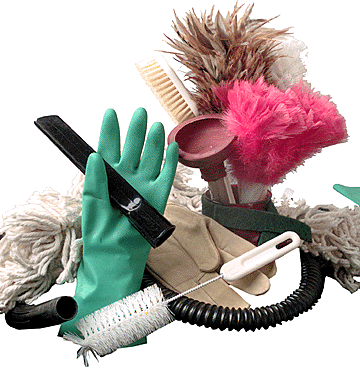
A special long-handled brush, about $7 - it looks like a giant pipe cleaner - is easily slipped between the coils to remove lint and "gooey stuff," said Nishibe.
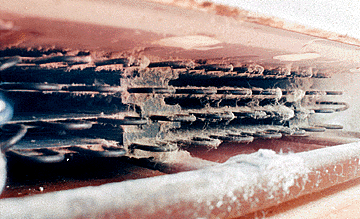
Refrigerator coils should get a cleaning every year for maximum
cooling efficiency. Above are coils that haven't been cleaned
in the last six months. By Dennis Oda, Star-Bulletin
Door seals, especially the one along the bottom, should be wiped weekly with a damp cloth or they become hard and brittle then crack causing cold air to leak out, he said. That keeps the thermostat constantly working. The bottom door seal also has a tendency to get sticky, so make sure you wipe it thoroughly, Nishibe said.
Replacement door seals can be purchased from specialty stores like Appliance Parts Co. for about $50. Make sure you have the model number when you go buying.
Usually, all that's needed to keep dishwashers in good working order is to keep its door gasket and spray arms clean and fish out any kitchen junk under the heating element.
The door gasket may look clean where you can see it, but there's a good chance its bottom section is covered with a slimy dirt that can cause the door to leak. Use a hand mirror under the bottom of the door to reveal any dirt accumulation.
Make sure any household cleaner you use to remove dirt from the gasket and door panel is strong, but nonabrasive. You might also lift the water level float from the base of the cabinet to check for dirt. (Check your appliance's instructions to locate exactly where it is.) If the float gets too dirty, it can stick in place, throwing the water level out of sync.
While you're at it, check the openings in the spray arms for small shreds of plastic, or other debris, which you would remove with a pair of tweezers.
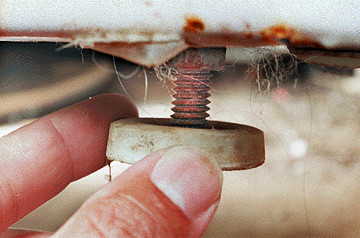
Washing machines and clothes dryers should be kept level,
using the leveling ring under the machine, so parts don't wear
unevenly and excessively. By Dennis Oda, Star-Bulletin
And check the drain area regularly for small measuring spoons or other kitchen items. These items can be baked onto the heating element, and break up and chip the food grinding impellers located in the drain.
(Recently, I didn't check the drain and a red plastic something worked its way into the draining tube and clogged. After I spent an hour of removing hoses and spilling icky water on the floor, my wife took over and successfully unplugged the drain.)
As for maintaining your washer and dryer, the best you can do is to keep them level and clean.
If they're not level, moving parts will wear unevenly and excessively, several service technicians said. You know they are out of level when they start banging around as if possessed. In some cases, "self-leveling" legs can compound the problem because they don't always level the appliance, but extend to close the gap between themselves and the floor.
Place a small level on the top frame of the appliance to find out where the problem is. Then screw the legs up or down accordingly; in the case of the self-leveling legs, lift the low side of the appliance until that leg extends itself to the proper height.
To keep the finish on these appliances looking good, wash them regularly with a mild detergent. Some components, such as the fabric softener reservoir on a washing machine, can be removed for better cleaning. Just lift the reservoir's friction ring and the reservoir will detach from the agitator.
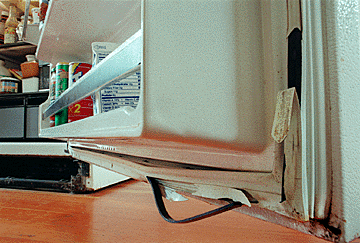
A refrigerator's worn rubber gasket should be replaced.
Replacement door seals can be bought at specialty stores
like Appliance Parts Co. for about $50.
By Dennis Oda, Star-Bulletin
For dryers think "No lint, no lint." Dryers produce so much lint you must pay particular attention to the lint trap and the dryer vent tube. Remove and clean the lint trap with each load. Failing to do this can cause the dryer to overheat and start a fire. But it also affects efficiency. Check the vent tube at least twice a year, especially if your dryer vents up.