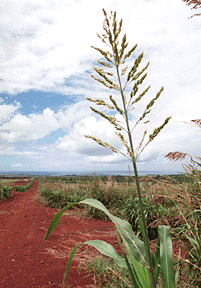
Sorghum was planted as a windbreaker for the coffee crop.
By Dean Sensui, Star-Bulletin
Sorghum was planted as a windbreaker for the coffee crop.
By Dean Sensui, Star-Bulletin
 What Parkhurst is really interested in are new plants and plantings popping up on the Leilehua Plain, particularly in the old sugar fields on the downward slope into Waialua. It isn't cane, it isn't pineapple, it isn't pakalolo. It looks like rows of shiny little bushes interspersed with clumps of giant mutant nut grass.
The small stuff is coffee, which will get much bigger, and the big stuff is sorghum, which won't get any bigger. The sorghum is planted essentially as a windbreak for the coffee, but sorghum - a tropical grass from Syria - is pretty good stuff, too. The panicles atop the plant are grains, and the whole plant can be used as fodder.
The coffee's the thing, however. "They're only about 1 to 2 feet tall now, but they were planted only a few months ago," said Joe Liu, a project manager with of Waialua Sugar. "The idea is to diversify crops, and coffee does very well in Hawaii."
A six-acre test site planted in 1990 along Kamehameha Highway has produced good coffee, and the plants are large. Although a coffee plant can produce beans in about 2 years, said Liu, it takes 3 or 4 years for a coffee plant to get big enough to really earn its keep.
Start thinking up names for this upcoming brew, because "Kona" is already taken. North Shore Blend. Leilehua Lollapalooza. Wahiawa Kine Grind. Waialua Joe.