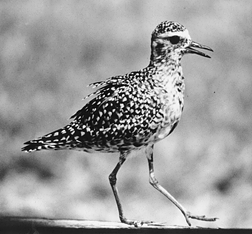
The plovers are back in town. Star-Bulletin file photo
The plovers are back in town. Star-Bulletin file photo
"It's a solitary bird, never in a flock like the other birds," she added. "Since the month of May, I haven't seen these beautiful birds."
 Size wasn't indicated, but Bishop Museum bird expert Bob Pyle speculated that it might be an immature night crown heron if it was large, a Pacific golden plover if it was medium-sized, or a mannikin bird if it was small.
Our money's on the plover, and they should be reappearing at the park. It's that time of year. As recently reported by the Star-Bulletin's Susan Scott, these are migratory birds, winging up to 4,000 miles in one hop to nesting grounds in the arctic, and they bag out of town in May.
In August, the mama birds fly back, followed by the daddy birds and the young birdlings in September and October. After all, they're golden, which means that hungry polar bears will spot them in the winter. Better to fly south.
They're territorial, which means that the Veterans Park plover is likely the same individual.
The plovers will winter in Hawaii, taking meetings, sleeping late, doing brunch and maybe a little teleconferencing. When next spring comes, they'll get that itch again and take off.
The Hawaiian name for the Pacific golden plover is "kolea," but ancient Hawaiians also called them "lunch," because they're tasty. Watch it, though, they're now a protected species.