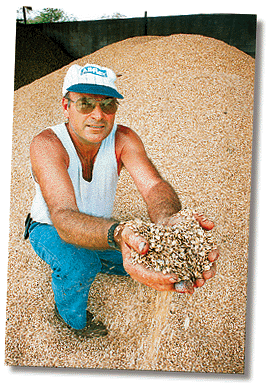
The barley that Dave Kugel feeds his dairy cows is up by almost $100 per ton. Photo by Dennis Oda, Star-Bulletin
The barley that Dave Kugel feeds his dairy cows is up by almost $100 per ton. Photo by Dennis Oda, Star-Bulletin
The price that Hawaii Baking Co. pays for flour to make bread has jumped roughly 20 percent.
Both operations are expecting more increases later this year.
That's bad news for consumers. Although businesses up and down the food chain in Hawaii have swallowed part of the higher grain-related production costs, increases have filtered into local supermarket aisles.
The result: We're paying more for selected products, like milk and bread, than a year ago. And we could see even more hikes in grocery prices in the months ahead. But the general consensus among retailers, wholesalers, processors and others is that Hawaii probably won't see the 5 percent-plus increases that national experts are projecting for food prices in the next year.
"If anything, I see it being flat or becoming more aggressive" in pricing, said Ron Hellstrom, executive vice president of Foodland Super Markets, which has 30 stores statewide.
A sluggish local economy and intense competition in the retail sector has made it riskier for businesses to raise prices. People on tight budgets tend to cut back on purchases and do more comparison shopping, becoming especially sensitive to price increases.
That's one reason Hawaii Baking, the largest local bread maker, has absorbed more than half the increase in flour prices the past year, even though flour is by far the most-used ingredient, said Jim Elder, operation manager. "You can't go raising prices 20 percent in this kind of market," he said.
Elder said Hawaii Baking is paying the highest price ever for flour, which is processed from grain, and expects a 7 percent to 10 percent increase by October.
Some experts, however, say the grain shortages will ease as farmers plant more crops to capitalize on the high prices. And those high prices, in an odd twist, have led to lower beef prices. Livestock ranchers nationally have culled their herds to reduce feed costs, creating a plentiful supply of cattle for slaughtering.
Eric Ching, operation manager for Palama Meat Co., said wholesale beef prices probably are at the lowest level in 10 years.
Retail beef prices likewise have come down. At Foodland, the drop has been about 12 percent in the past six to eight months, Hellstrom said. The chain recently was selling ground beef at 88 cents a pound, the lowest in more than a year, he said.
"We've been eating more steak than usual because of the sales," said Cindy Chun, shopping this week at Safeway in Kapolei.
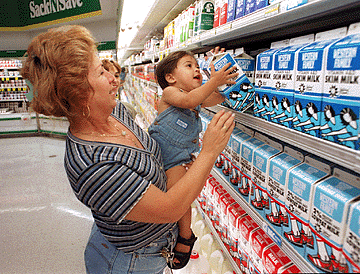
Robert Kutzen Jr., 1-1/2, and grandmother Sharon Gouveia check out
the milk at the Waikele Sack n Save. Dairy prices have gone up.
Photo by Dennis Oda, Star-Bulletin
Roger Godfrey, division president for Fleming Cos. Inc., the state's largest food wholesaler, said he expects grocery prices to rise roughly 2 percent next year. He is among those who believe the 5 percent projections are too high.
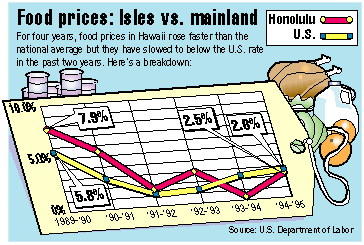
If the past two years are any indication, Hawaii could well take less of an inflation hit than the mainland for food.
In 1994, Honolulu food prices increased a meager 0.3 percent, while mainland prices rose 2.4 percent, according to federal government data. Last year, the gap narrowed significantly, but Hawaii still had lower food inflation.
Paul Brewbaker, Bank of Hawaii chief economist, said the state's slow economy and tough retail environment have put a damper on price increases.
And even though selected items could rise significantly, he doesn't foresee much change in the overall inflation picture for food.
"The consumer is not going to notice much of this," he said.
Dairyman Kugel, however, is not so optimistic. The run-up in grain prices will continue to affect everything from eggs to poultry, he said.
And that's hitting businesses like Boston's North End Pizza Bakery fairly hard.
Mike Bianchi, president of the Oahu chain of pizza restaurants, said prices for cheese - the most costly ingredient in pizzas - have risen 10 percent to 12 percent in just the past four months.
So far, he said, the company has not raised pizza prices, opting instead to eat the added costs.
"But that's getting harder and harder to do," he said.
"It's an ongoing battle."