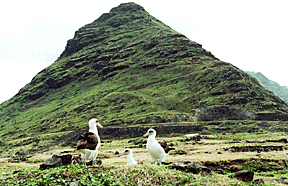
Albotrosses nest at Kaena Point. Photo by Ken Sakamoto
Albotrosses nest at Kaena Point. Photo by Ken Sakamoto
Now the scars are healing on Oahu's last great coastal wild lands.
Deep furrows carved by years of off-road vehicle use are filling with sand and disappearing beneath a blanket of native ohai, naupaka, ilima and morning glory.
Albatrosses have returned to court their mates and nest here, and a newly established colony of wedgetail shearwater is growing each year. Endangered Hawaiian monk seals haul up on the beach, while whales and dolphins cavort offshore.
"By and large, shutting off vehicles and allowing the ecosystem to just regenerate by itself has probably been the primary (management) feature out here," said Randy Kennedy, who oversees the three state reserves on Oahu.
But while the state hasn't been baby-sitting the 23-acre reserve, it has aided nature's restorative efforts.
Workers like Nalu Yen, Pete Cabanilla and Pedro Baguistana pull out haole koa and other invasive weeds by hand. They hunt pigs and mend fences that protect endangered plants. They trap mongooses and rats that eat the eggs of ground-nesting native birds, and mice that devour the seeds of rare plants.
It's an ongoing battle, but they're proud of their success.
"There's so much to do, but I see it getting better," Baguistana said.
Yen agreed.
"We're taking over little sections. It's coming together in pieces."
The men also have been helping ecologist Bill Garnett plant hundreds of rare native species at Kaena Point.
"We're trying to develop techniques here that can be used in other reserves, like a recipe book we can give them," Garnett said.
The state is still working to control motorcycle activity in the reserve. Once that's done, Kennedy said, it won't be long until the landscape is entirely native and the sand dunes are restored.
Already the area is attracting droves of schoolchildren, researchers, hikers, fishermen, bicyclists and others drawn to the remote scenic coastline and its unique natural features. Kennedy said he hopes to add educational programs and perhaps hire an ambassador, such as the one employed at Kauai's Kalalau Valley, to enhance interpretive services at the reserve.
To state Land Board Chairman Mike Wilson, the dramatic transformation of Kaena Point has done more than ensure the survival of a coastal ecosystem that dates back 1,500 years. He thinks it also will inspire people to assume stewardship of public lands.
"We can succeed in Hawaii," he said. "There's no reason to give up in protecting our natural resource heritage."