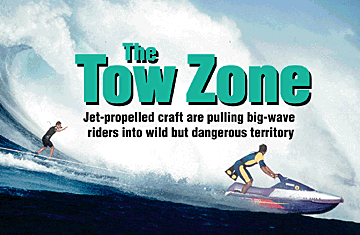
Above, Laird Hamilton speeds along after towing Gerry Lopez into a wave at Jaws. Bottom, Dave Kalama drops the tow bar after reaching wave speed before the wave hits the shallow reef and jumps in size and steepness.
Photos by Erik Aeder, Special to the Star-Bulletin
By Greg Ambrose
Star-Bulletin
THE insistent whine of the revving engine is annoying, and the stench of fuel overpowers the scent of the sea.
But when the jetski slingshots the towed surfer onto the giant wave a mile from shore, the burst of speed is exhilarating.
Waves have beckoned to surfers for centuries, and most people have heeded that siren's call in fun, friendly waves. But a select few have heard in the ocean's roar a call to danger, and approach the sea with a desire that only the most menacing waves can satisfy.
Human frailties have set the limits to the size of waves that can be ridden, but jet-propelled watercraft are now helping surfers cross over into the Unridden Realm, the holy grail of big-wave riding.
They go by various names: jetski, thrill craft, WaveRunner, etc. Big-wave rider Ken Bradshaw simply calls them machines. The machines were responsible for Bradshaw's worst nightmare.
He has courted the big waves at Waimea Bay with a lover's ardor, and yet as the crowds of surfers filled his beloved bay over the years, Bradshaw began to seek solitude and excitement by paddling solo to surf waves far from shore.
Bradshaw was blazing a lonely trail out to the cloudbreaks, reefs so distant that viewed from shore the huge waves seem to touch the clouds.
"Paddling out there in the unknown is a fantastic feeling."
The crowd was so thick and unruly when Thanksgiving Day dawned last year with perfect big waves at Waimea that Bradshaw rode his WaveRunner out to his favorite haven, a cloudbreak nearly two miles outside of Alligators, west of Waimea Bay.
Bradshaw's once-pristine spot was swarming with jetskis towing surfers into the waves and photographers who wanted to capture the action. "I was overwhelmed by the sight. It was like a cartoon movie, a bunch of guys racing around, some of them I had never seen before. And none had ever surfed the place before."
"I came home so depressed that Thanksgiving morning. I knew the reality of what was going to happen now with crowds out on outer reefs."
Others anticipate a greater disaster. "Somebody eventually is going to die," says big-wave rider Randy Rarick, who also runs the Triple Crown of Surfing contests.
Unfortunately, there exists an intense craving among surfers for fame, to do the unusual or exceptional or insane thing. Then others have to top that for their moment of fame, some forcing themselves into situations they are ill-equipped to handle.
"It started with some of the most experienced surfers, but now the other surfers have been watching the big boys and they want to copy them," says state Marine Patrol officer Don Windle.
Before the machines, the ocean determined who would be allowed to surf the outer reefs. "When you go up against nature, nature has a way of keeping you on the outskirts of your ability," says big-wave rider and Leeward lifeguard Capt. Brian Keaulana.
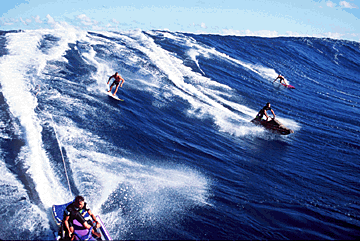
"If you try to paddle out, the ocean would knock you back in. Using machines to get out there and deal with nature, you're in an environment that is unknown, and so strong the human mind can't even comprehend.
"The tow-in guys don't even know what danger they are in. They need to crawl before they walk, walk before they run, run before they fly. All these guys want to go into space already and they can't even crawl."
A wild bunch of surfing, snowboarding, thrillcraft riding, sailboarding Maui boys drew upon their varied experiences to create the new extreme sport of tow-in surfing several years ago.
Lead by the charismatic Laird Hamilton, son of famous Kauai surfer Billy Hamilton, the Maui crew used jetskis to overcome the laws of physics that prevent surfers from catching extremely large waves. Simply stated, a human's insignificant mass and puny paddling power are woefully inadequate to overcome the tremendous force of water rushing up the face of a wave as it steepens and prepares to break.
The Maui madmen were inspired by the huge, beckoning peaks of Jaws, a distant surf spot rendered inaccessible by the cliffs and treacherous shoreline beneath the Hana Highway.
With the machines doing all the work, the surfers were able to abandon the huge, thick and unwieldy rhino-chaser surfboards necessary to stroke into big waves. Riding sleek, maneuverable boards and using footstraps to full advantage, these new extreme sportsmen are drawing on their sailboarding experience to perform unbelievable maneuvers in fearsome waves.
"You finish the ride and look back and watch Laird, and you think 'My God, that's unbelievable, that's cartoonish,' " Bradshaw says.
The pitfalls are numerous, and impossible for the inexperienced and unwary to dodge. "You're not only dealing with your own ability and limitations in the ocean, you're depending on the driver's ability," says Keaulana.
"He could tow you into your worst nightmare, megatons of white water that can hold you under forever, or into a shallow area where you'll get ripped to shreds."
Rider and driver also are betting their lives on the machine's reliability, and mechanical breakdowns far from shore in big waves can have fatal consequences.
Lifeguards have towed even Bradshaw to shore after his machine died, and Hamilton was rescued from a dead machine between Maui and the Big Island.
Wiping out in big waves with your feet in straps is like being caught underwater in a bear trap. Standing up for the tow into the wave is a delicate operation. A mistake can be disastrous.
A crowd of machines and riders in the same area creates a prime potential for tangled lines and strangled wave riders.
The infestation has spread even to Maui. There were eight machines out at Jaws recently, not including the photographer-carrying helicopters circling for just the right angle. "It's going to get worse and worse, I can see it happening already," city lifeguard Terry Ahue says. "There are already a dozen skis now, and some don't have any respect for the surfers."
Bradshaw and others fear that litigation will end their adventures. "Somebody who doesn't belong out there will get in trouble, they will end it for everybody and we'll be outlaws," Bradshaw says.
The Marine Patrol is prepared to step in when machines tow riders onto waves where free-surfers are riding and enforce the state law that prevents motorized craft from operating within 200 feet of swimmers or surfers.
"We don't want the city or state involved," Bradshaw says. "We want the help and aid of lifeguards to enforce it ourselves."
"It's going to take everybody sitting down to talk together and working something out," Ahue said.
Bradshaw hopes the neophytes will abandon the new sport as the cost of their inexperience mounts. Losing a jetski, which can cost up to $8,000, is like losing 15 surfboards. A jetboat, which can cost up to $13,000, already has been destroyed during a tow-in session in Oahu's big waves.
But despite the potential for disaster and the stress to people seeking to escape the insidious invasion of technology, the machines are here to stay.
"I still believe that unridden realm exists, 30-foot-plus waves that you chase without machines," Bradshaw says. "If you don't prepare for it, when the opportunity arises, you'll never be ready.
"The reality is, all previous attempts were unsuccessful. On machines, it's possible."
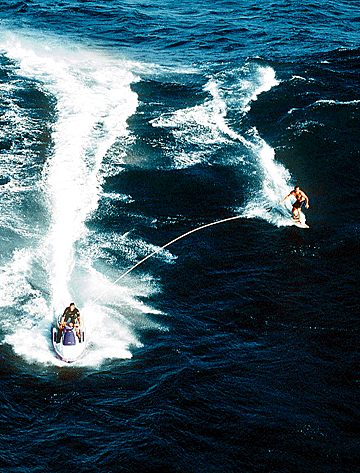
Above, Laird Hamilton speeds along after towing Gerry Lopez into a wave at Jaws. Below, Dave Kalama drops the tow bar after reaching wave speed before the wave hits the shallow reef and jumps in size and steepness.
Photos by Erik Aeder, Special to the Star-Bulletin